Women Supporting Women RN Leader Training

Banner image
Image
Women Supporting Women online course
Continuing Studies
Degree Options
Delivery Mode
Introduction

Depression and anxiety are mental health issues that disproportionately affect urban, ethnically diverse, impoverished women--particularly when access to culturally sensitive care is limited. Through extensive research and years of practice, we've developed an evidence-based supportive/educative group invention, called Women Supporting Women (WSW), that reduces symptoms of anxiety and depression by empowering women to engage in mental health self-care.

Women Supporting Women is a community-driven, prevention focused solution whose leadership team consists of RNs and lay persons (either community health workers or mental health ambassadors) working collaboratively to serve women.

Upon completion of this course, you will be able to:

  • Describe the origin of WSW

  • Explain the intent, essential aspects, and structure of WSW

  • Outline the content in all sessions of WSW

  • Apply the above information to collaboratively lead your own WSW groups
     

You will receive a downloadable, 85-page WSW manual in both English and Spanish as part of this course to ensure you're equipped to lead your WSW group.

You can earn 5 contact hours for RN re-licensure and will receive a digital badge in recognition of your accomplishment.


Questions? Contact Laurie Lemmen, professional studies manager, laurie.lemmen@calvin.edu.
 

Cost to register: $100

 

Register

Understanding and Assessing Pain

Content Manager
Banner image
Image
A pre-med student checks the heartbeat of a patient.
Continuing Studies
Degree Options
Delivery Mode
Introduction

Pain is the most common reason patients seek health services. Healthcare professionals must think deeply about pain and its consequences and provide pain assessment and management services in a just manner. The International Association for the Study of Pain (IASP) is the global leader in studying and supporting pain relief, so we will reference the IASP regularly. Through this course you will be able to:

  • Define different types of pain
  • Relate how patient and provider characteristics impact the process of pain assessment
  • Compare and contrast different pain assessment tools
  • Justify why a patient's report of pain should be respected

Available for cohort-based registration – contact Abbie Lipsker, abbie.lipsker@calvin.edu.

Request information

Teaching as a Christian Practice

Content Manager
Banner image
Image
A teacher stands next to a whiteboard in front of a classroom of students.
Continuing Studies
Degree Options
Faculty
Introduction

Teaching as a Christian Practice can be taken as an in–person workshop or 2-credit graduate class designed for Christian educators eager to strengthen and deepen their understanding of how Christian faith is truly able to affect everyday classroom practices and instruction.  It takes place onsite at Grand Rapids Christian Schools.  

2025 registration has closed, the next workshop is scheduled for June 8-11, 2026.

Teaching as Christian Practice

Teaching as a Christian Practice is led by David I. Smith, a highly regarded and in-demand worldwide conference speaker and workshop leader in Christian education. He is a professor of education at Calvin, and Director of the Kuyers Institute for Christian Teaching and Learning. Professor Smith began his career teaching French, German, and Russian in public secondary schools in the United Kingdom, where he became fascinated by the question of how our beliefs, values, and commitments can shape and guide our approaches to teaching and learning. After graduate work in philosophical theology, philosophy of education, and curriculum studies, he moved to Calvin. He serves as Editor of the International Journal of Christianity and Education and is regularly involved nationally and internationally in professional development for schools, colleges, and universities, especially focusing on the connection between faith and teaching. Find out more at: onchristianteaching.com

Material for the workshop comes from David's book, On Christian Teaching.  Christian teachers have long been thinking about what content to teach, but until now, little scholarship has been devoted to how faith forms the actual process of teaching. Is there a way to go beyond Christian perspectives on the subject matter and think about the teaching itself as Christian? In this book David I. Smith shows how faith can and should play a critical role in shaping pedagogy and the learning experience. 

Other Opportunities

Interested in other professional development opportunities offered by Calvin University?

Request information

Project GreenER

Content Manager
Banner image
Image
A creek runs through green grasses and bushes, while Plaster Creek Stewards work to restore it.
Friendly title
Project GreenER: Plaster Creek Stewards
Continuing Studies
Degree Options
Delivery Mode
Introduction

Project GreenER is a free, eight-session adult educational program intended to foster understanding of and build agency for watershed care. Hosted by Plaster Creek Stewards, this program equips participants with the knowledge and practical skills to implement creek- and climate-friendly projects within their communities. Meeting twice monthly, participants explore Plaster Creek as a historical and present place, learn watershed ecology within the context of climate resilience, build practical and community connection skills, and be eligible to receive funding to plan and implement green projects in their own neighborhoods. 

Who can participate?

Any adults (18+) who are connected in some way to the Plaster Creek watershed – such as living, working, attending worship, or recreating in the area.

You're qualified!

Yes! No prior knowledge or education is necessary to participate in this program. If you are interested in learning more about Plaster Creek, your watershed neighbors, and how to improve local environmental health through community-based action, then this opportunity may be a good fit for you. 

What’s required of participants?

Commitment to regular attendance of the sessions and seeing the project work through to completion.

Timeline

Learning sessions will be scheduled out over 4 months, every other week, typically on weekday evenings. The first half hour of each meeting will be dedicated to building community over a meal. Participants will also be invited to attend extra hands-on experiences outside of normal meeting times, as opportunities arise and participants’ schedules allow. Additional assignments between classes will be offered, as well, to deepen engagement and allow participants to follow their own curiosities.

Logistics

Cost

There is currently no charge for this program. However, if participants would like to contribute to the project fund, those contributions (in addition to grant funding available) will be divided equally among all participants at the program's end to support their projects. The projects might include things like rain gardens, landscaping with native plants, planting trees, hosting educational events, or other activities that interest participants.

Transportation assistance

If transportation assistance is required, please communicate with leadership to receive bus passes for transportation to and from sessions.

Meeting locations

We intend for this program to be an in-person experience since so much of our ecological restoration work and community engagement efforts are place-based and hands-on. Meetings will be held at one or both of the following locations:

Program Requirements

Led by Plaster Creek Stewards, this program fosters an understanding of watershed care and challenges you to make a positive ecological impact in your community.

Mental Health Ambassadors

Content Manager
Banner image
Image
People sitting talking
Friendly title
Mental Health Ambassadors
Continuing Studies
Degree Options
Delivery Mode
Introduction

Health includes our physical, emotional, social, and spiritual well-being. It impacts how people think, feel, and behave. Though mental health is an important part of overall health at all stages of life, physical health is generally the focus of attention. This emphasis on physical health, to the exclusion of other aspects of health, leads to mental health stigma and unaddressed symptoms of depression and anxiety.  

It is not always possible for people to access mental health care due to barriers such as cost, language, transportation, and other factors. Mental health ambassadors fill a critical gap by being equipped to support mental health self-care and identify professional resources when necessary. Through this course, you'll be able to:

  • Enact the role of a mental health ambassador 
  • Respond effectively to promote positive mental health outcomes 
  • Differentiate between various symptoms of depression & anxiety 
  • Identify the causes of depression & anxiety 
  • Teach mental health self-care strategies 
  • Refer to a professional when necessary 

Cost for this course is $30, which includes a digital badge validating your learning issued upon completion. Contact Laurie Lemmen for more information, laurie.lemmen@calvin.edu


Register

Managing Pain

Content Manager
Banner image
Image
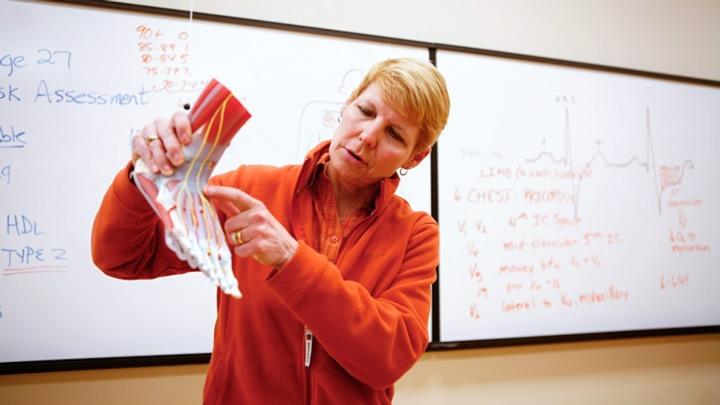
A professor, holding a model of the human foot, describes its anatomy to students..
Continuing Studies
Degree Options
Delivery Mode
Introduction

Pain management is the aspect of healthcare involving the relief of pain using medications and non-pharmacological interventions. Through this course developed by a nursing professor at Calvin, learners will be able to compare different types of pain medications, describe current evidence for cannabis use to manage pain, identify evidence based non-pharmacological pain management strategies, and explain how labeling a patient as a “drug seeker” is stigmatizing.

  • This course satisfies 1 contact hour of continuing education for Michigan nurses.

Available for cohort-based registration – contact Abbie Lipsker, abbie.lipsker@calvin.edu with questions.

Request information

Implicit Bias in Health Care

Content Manager
Banner image
Image
A women monitors the blood pressure of another student who's sitting on a stationary exercise bike.
Continuing Studies
Degree Options
Delivery Mode
Introduction

For this segment of the training, you will receive one contact hour of credit. When combined with the live session in January, you will receive three contact hours. This one-hour segment includes completing two readings, watching one video, and participating in a discussion forum after each reading and video (a total of three discussion forum posts).

After completing this one hour online course and the two-hour live training (total of three hours), you will be able to:

  • Reflect on current implicit bias research and strategies to reduce disparities in health care.
  • Describe how cultural norms, language, and experiences shape our individual knowledge and decision-making.
  • Describe the neuroscience of implicit bias.
  • Identify several forms of bias.
  • Interpret the relationship between implicit bias and disparate access to and delivery of health care services.
  • Explain a process to mitigate implicit bias in delivery of health care services.

Available for cohort-based registration – contact Abbie Lipsker, abbie.lipsker@calvin.edu with questions.

Request information

Second Chance Hiring

Content Manager
Banner image
Image
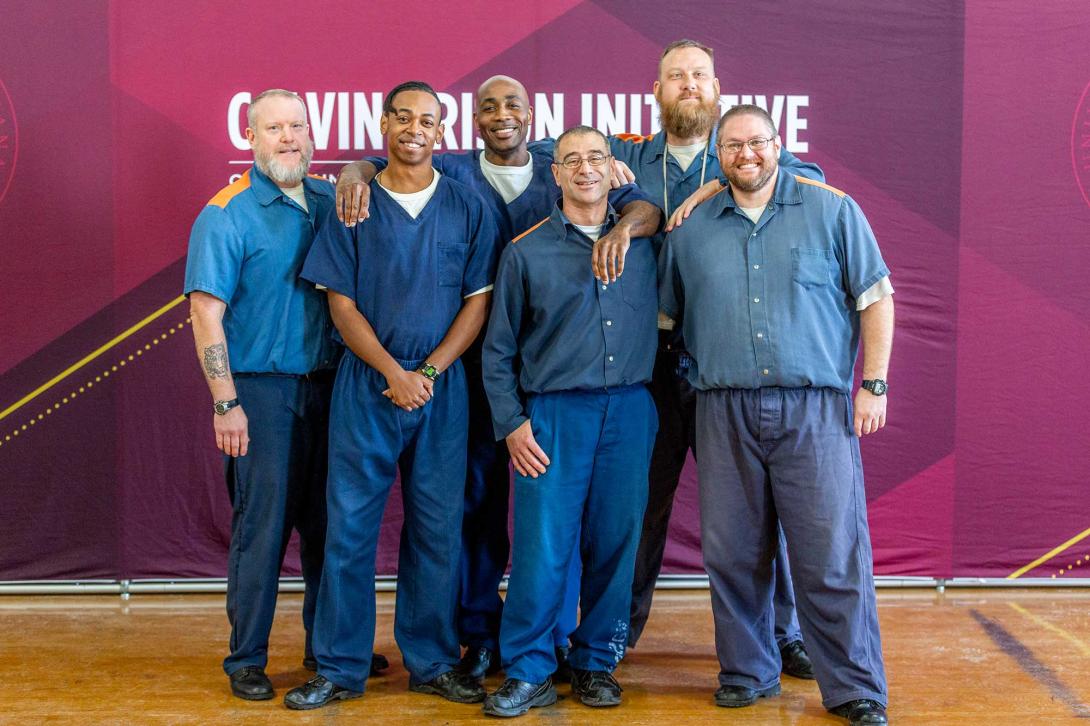
CPI Students group picture
Continuing Studies
Degree Options
Delivery Mode
Introduction

Hiring people who were once incarcerated is a positive practice for many organizations, resulting in employees who are well-trained, loyal, and eager to work. Yet some employers do not consider hiring people with a criminal record due to fear or bias. The cost is high to individuals and our communities for not hiring from this population, since with unemployment comes increased recidivism and failure to thrive.

In collaboration with TalentFirst and the Michigan Department of Corrections, Calvin University offers a Second Chance Hiring professional development program to equip HR professionals, hiring managers, and organizational leaders with the tools to confidently recruit and retain returning citizens - tapping into a reliable, underutilized talent pipeline.