Implicit Bias in Health Care

Content Manager
Banner image
Image

A women monitors the blood pressure of another student who's sitting on a stationary exercise bike.
Continuing Studies
Degree Options
Delivery Mode
Introduction

For this segment of the training, you will receive one contact hour of credit. When combined with the live session in January, you will receive three contact hours. This one-hour segment includes completing two readings, watching one video, and participating in a discussion forum after each reading and video (a total of three discussion forum posts).

After completing this one hour online course and the two-hour live training (total of three hours), you will be able to:

  • Reflect on current implicit bias research and strategies to reduce disparities in health care.
  • Describe how cultural norms, language, and experiences shape our individual knowledge and decision-making.
  • Describe the neuroscience of implicit bias.
  • Identify several forms of bias.
  • Interpret the relationship between implicit bias and disparate access to and delivery of health care services.
  • Explain a process to mitigate implicit bias in delivery of health care services.

Available for cohort-based registration – contact Abbie Lipsker, abbie.lipsker@calvin.edu with questions.

Request information

Second Chance Hiring

Content Manager
Banner image
Image
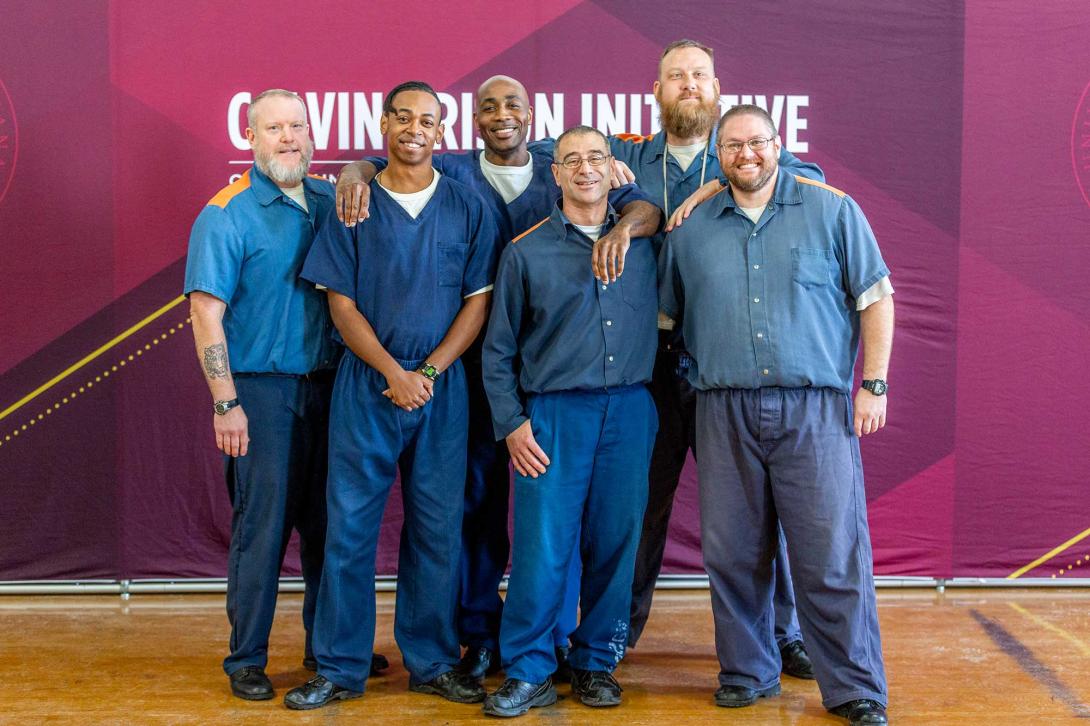
CPI Students group picture
Continuing Studies
Degree Options
Delivery Mode
Introduction

Hiring people who were once incarcerated is a positive practice for many organizations, resulting in employees who are well-trained, loyal, and eager to work. Yet some employers do not consider hiring people with a criminal record due to fear or bias. The cost is high to individuals and our communities for not hiring from this population, since with unemployment comes increased recidivism and failure to thrive.

In collaboration with TalentFirst and the Michigan Department of Corrections, Calvin University offers a Second Chance Hiring professional development program to equip HR professionals, hiring managers, and organizational leaders with the tools to confidently recruit and retain returning citizens - tapping into a reliable, underutilized talent pipeline. 

Cultural Values in Ministry

Content Manager
Banner image
Image
People meeting together in a church setting
Friendly title
CICW microcredential
Continuing Studies
Degree Options
Delivery Mode
Area of study
Faculty
Introduction

Developed in partnership with the Calvin Institute of Christian Worship and the School of Graduate and Continuing Studies, this course equips leaders of all types of ministries, including worship leaders and worship planners, with practical tools for relating well to people from a variety of cultures. Understanding and respecting cultural differences is key to a healthy ministry. Participants will generate self-awareness, humility, curiosity, and “other orientation” through the understanding of cultural values.

With wisdom shared from scholars such as Pennylyn Dykstra-Pruim, David I. Smith, and John D. Witvliet, among others, the course, created by Kai Ton Chau, is online and asynchronous but includes interaction between students and guided discussion by the faculty leader.

Those who complete the course will earn a digital badge, Cultural Values in Ministry, to validate their learning.

By the end of the course, learners will be able to:

  • Name and recognize the differences of five cultural values.
  • Analyze how these cultural values influence individuals' behaviors, perspectives, expectations, and choices, particularly related to church ministries.
  • Explain interpersonal techniques to communicate and collaborate well with people from varying cultural orientations.

Register

Join a cohort of learners from around the globe. Upcoming dates: April 20-May 1, 2026. (This course is full and registration has been closed. Email laurie.lemmen@calvin.edu to express interest in a future offering.)

  • Course will be offered in an accelerated, two week time frame (with extra time allowed at the end for those preferring a slower pace). 
  • Registration costs $100 per individual. Register 3 or more people from your team to receive a 50% off rate (coupon code: GROUP50).
  • Takes approximately 10-12 hours to complete asynchronously. Complete the coursework at whatever time works for you.
  • Contact continuingstudies@calvin.edu for more information.

Anxiety, Angina, Attack

Content Manager
Banner image
Image
A student works on her laptop in a chair in the Devos communication building lobby.
Friendly title
Anxiety, Angina, Attack: Knowledge and Best Assessment Practices for Chest Pain
Continuing Studies
Degree Options
Delivery Mode
Introduction

In this online module, you will be learning about pain in general, anxiety and then cardiac and non-cardiac chest pain. You will also take part in a simulation exercise of an inpatient psychiatric patient who is experiencing chest pain.

Pain is the most common reason people seek medical care, so in this session the following objectives will be met:

  • Discuss what pain is.
  • Describe types of pain.
  • Recognize symptoms of anxiety.
  • Explain cardiogenic and noncardiogenic causes of chest pain.

Available for cohort-based registration – contact Abbie Lipsker with questions.

Request information