How George Holmes was equipped to punch above his weight
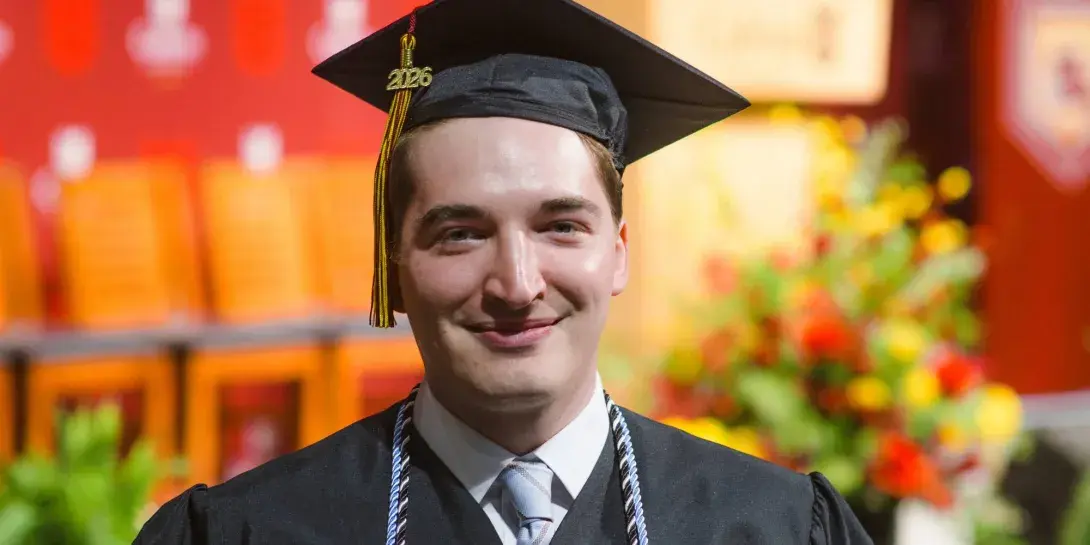
When George Holmes ’26 crossed the stage this spring, he did so with clarity about where he’s headed, and why. A politics, philosophy, and economics major with a philosophy double major, business minor, and pre-law focus; Holmes is preparing for law school and a career addressing justice issues, especially housing and community development.
But his path to Calvin, and to this moment, was anything but predictable.
The Leap That Changed Everything
Holmes grew up just minutes from campus in Grand Rapids. Still, like many students, he once imagined going farther away for college.
After graduating from East Grand Rapids High School just before the pandemic, Holmes took a gap year. During that time, a family tragedy and several uncertain years left him unsure whether college would even happen.
Eventually, Calvin kept appearing on his radar - through mentors, community members, and the impression left by graduates he had encountered over the years.
“The thing I noticed about Calvin graduates was initiative,” Holmes says. “They weren’t just going through the motions. They cared about what they were doing and wanted their work to matter.”
When Holmes finally decided to enroll, and live on campus even as a local student, the experience changed quickly.
“I remember walking onto my dorm floor, and someone immediately introduced himself to me,” Holmes says. “That person is now one of my best friends. Right away, I realized this community pulls you in.”
That moment marked a turning point.
A Community That Pulls You Forward
At Calvin, Holmes found something he hadn’t experienced before: a campus where relationships shape the learning experience.
Small classes and accessible professors helped him build meaningful academic connections, while dorm life created friendships that extended far beyond the classroom.
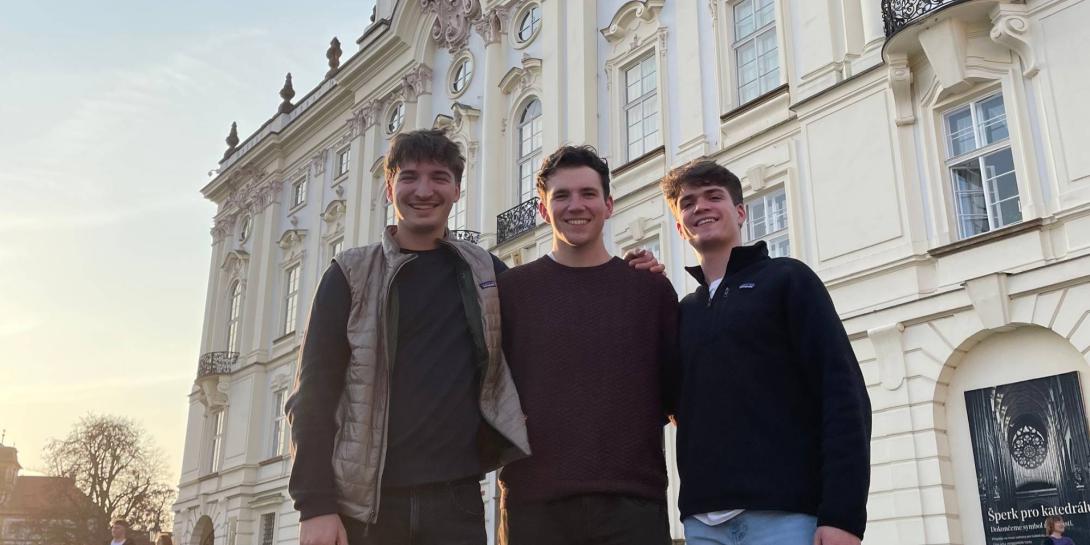
“At a bigger university it might be easier to blend into the background,” Holmes says. “Here, people notice you. Professors know you. And that pushes you to grow.”
Holmes says that the environment helped him re-engage with education in a way that felt purposeful.
Faith, Questions, and Personal Growth
Holmes arrived at Calvin without a strong religious background and with some skepticism about faith.
What changed was the way he saw faith lived out by the people around him.
“Seeing how my friends’ faith shaped their perspective and the way they cared about others really influenced me,” he says.
Over time, Holmes began to see connections between Christian ideas about restoration and the justice issues he cared about, especially in areas like housing and community stability.
“I started to realize that faith can be a powerful driver for working toward justice and caring for people,” he says.
The Experience That Changed His Direction
One of the most formative experiences for Holmes began even before he arrived at Calvin, while working with an architectural firm involved in redesigning affordable housing in Grand Rapids.
Meeting residents and hearing firsthand about challenges, safety concerns, accessibility issues, and unstable living conditions, left a lasting impression.
“It was eye-opening,” Holmes says. “Housing is foundational. If that’s unstable, everything else in life becomes harder.”
That experience helped shape his decision to pursue law and explore ways to influence systems that affect communities, an interest he continued to develop through his work at Warner Norcross + Judd as a Specialist in the Economic Incentives Practice Group. There, he helped support investments, particularly housing developments, that make projects in underserved neighborhoods financially feasible.
Where Calvin Students Punch Above Their Weight
At Calvin, Holmes discovered opportunities that allowed students to take real responsibility, often earlier and more deeply than they might at larger universities.
One of those opportunities was Knight Investment Management, a student-led investment fund that manages a portion of the university’s endowment.
Holmes joined as a freshman and quickly became immersed in the work: analyzing investments, presenting research, and responding to challenging questions from peers and advisors.
“It teaches you how to defend your ideas and think critically,” he says.
Over time, Holmes helped launch a new fixed-income sector within the organization, later led a team, and eventually became CEO, overseeing nearly 60 students.
“It’s real responsibility,” he says. “When students are trusted with something meaningful, they rise to the challenge.”
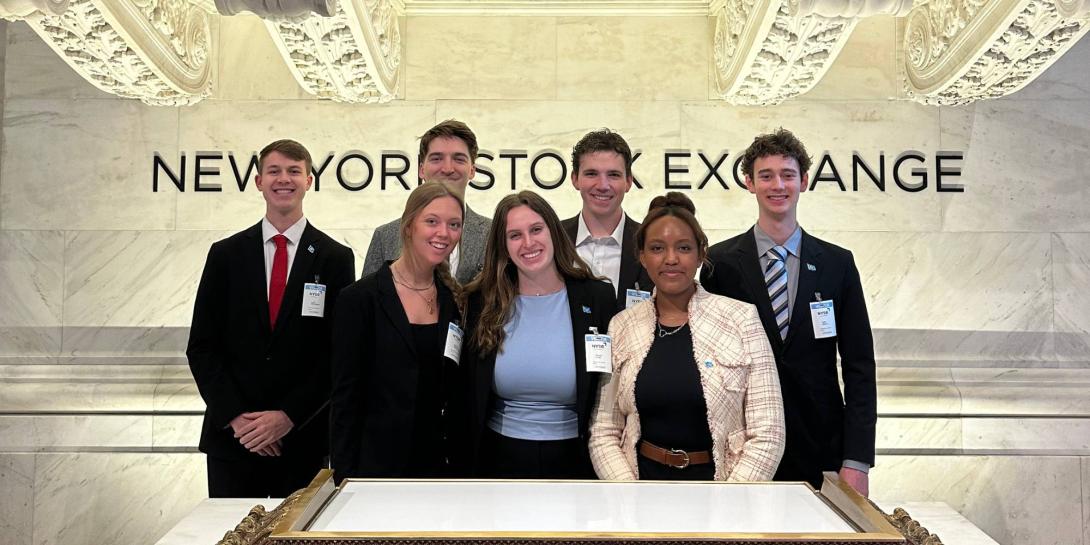
Experiences like that helped Holmes understand what makes Calvin distinctive.
“We punch above our weight,” he says. “We might be a smaller school, but when Calvin students show up in competitions, internships, or leadership roles, we’re ready.”
Mentors Who Opened New Possibilities
Holmes credits several professors for helping him see connections between his academic interests and real-world impact.
One of the most influential was Professor Leonard Van Drunen, who helped Holmes think differently about finance and investment.
Through that mentorship, Holmes began exploring the idea of impact investing, using financial tools not just for profit, but to create positive change in communities.
“It showed me that even systems people sometimes see as purely financial can be used for restoration,” Holmes says.
A Classroom Moment That Changed His Path
Holmes also recalls the moment he first realized philosophy would shape his academic journey.
Curious about the program’s reputation, he enrolled in an introductory philosophy course taught by Professor Kevin Corcoran.
“I was instantly hooked,” he says.
The class challenged him to think about questions of ethics, human flourishing, and purpose, topics that now influence how he approaches his future career.
“Calvin pushes you to think about what kind of life you want to live, not just what job you want,” Holmes says.
What Makes Calvin Different
For Holmes, Calvin’s strength lies in the way it blends academic rigor, experiential learning, and faith-driven purpose.
Students are encouraged to wrestle with big questions while also gaining practical experience and leadership opportunities.
“You can’t go through Calvin without thinking about how your work connects to the world around you,” he says.
That combination, he believes, helps explain why Calvin graduates often stand out.
The Road Ahead
After graduating, Holmes plans to attend law school and continue exploring ways to address housing challenges and community development.
Ultimately, he hopes to work at the intersection of law, policy, and investment, areas where thoughtful decisions can help strengthen communities.
As he prepares for what’s next, Holmes says Calvin gave him more than an education. It gave him direction.
“I feel ready,” he says. “Calvin helped me see that what matters isn’t just success—it’s making a difference.”


