Finding a Calling That Serves Others: Luke Harlow’s Journey at Calvin
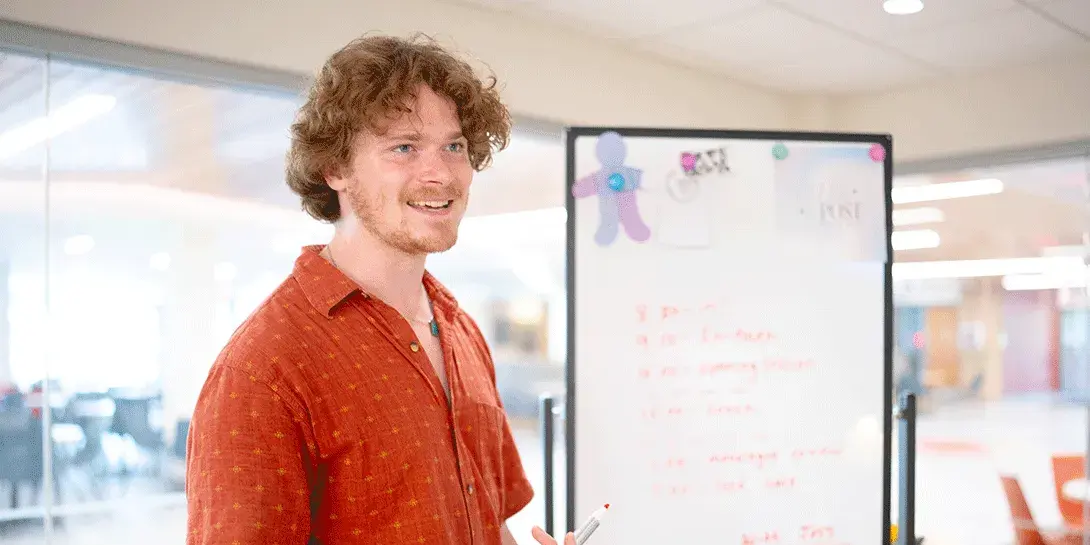
Because Calvin was always close to home, Luke Harlow ’26 assumed he already knew everything he needed to know about it.
What he didn’t expect was just how much more there would be to discover.
Now, preparing to graduate, that early assumption feels almost ironic.
“It’s honestly kind of sad,” Harlow reflects. “I feel like I’m just now scratching the surface of everything Calvin has to offer right as I’m about to leave.”
That sense of surprise didn’t come from one defining moment. It took shape slowly as Harlow was encouraged by his professors to partner on research opportunities, apply for externships, and travel abroad to experience medical practices in different cultural contexts.
When Curiosity Is Taken Seriously
Harlow arrived at Calvin intending to study psychology. He knew he wanted to help people, but he wasn't sure how that would come to fruition. Then one organic chemistry class in his sophomore year sparked the conversation.
After the course, a professor noticed how fully Harlow engaged with the material and pulled him aside.
“If you want to be a chemistry major, it’s only a few more classes,” Harlow was told.
It wasn’t a directive. It was an invitation.
Professors like Donald Tellinghuisen in psychology and Chad Tatko in chemistry consistently approached Luke that way—asking questions, naming strengths, and helping him see connections between disciplines instead of forcing him to choose between them.
That pattern of someone noticing his curiosity and then making space for it defined Harlow’s academic experience.
Learning That Keeps Expanding
As Harlow leaned into exploration, his learning moved well beyond the classroom.
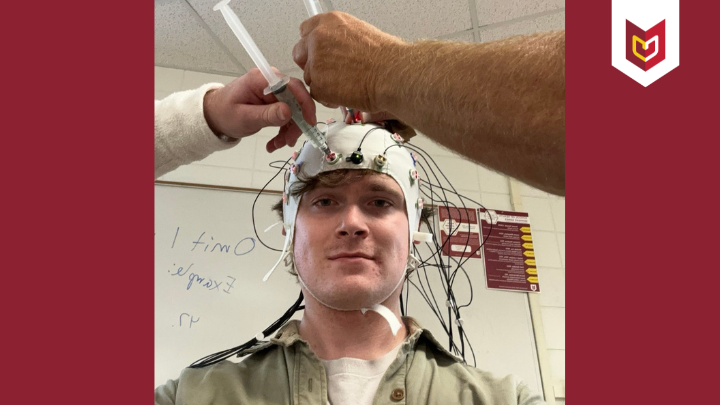
Through the Clean Water Institute, he became involved in applied research that connected environmental science to global health. What began as research alongside faculty eventually grew into leadership, as Harlow served as a teaching assistant and helped guide other students through lab work and data analysis.
Psychology followed a similar path. Research embedded in coursework opened doors to interdisciplinary projects Harlow never would have pursued on his own. In each case, professors recognized his curiosity and trustworthiness and invited him into meaningful work.
“Those opportunities weren’t just about building a résumé,” Harlow says. “They kept reshaping how I thought about learning—like it was something living, not contained to a class.”
The deeper he went, the clearer it became: Calvin wasn’t something you could fully “figure out” from the outside. Its depth revealed itself through participation.
A Turning Point in Nepal
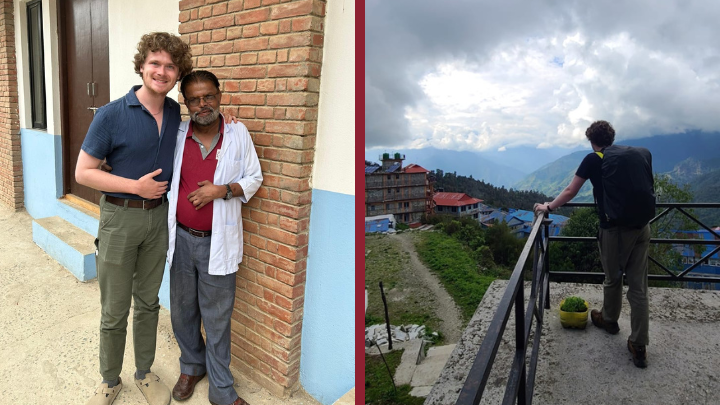
That realization reached a turning point in Nepal.
Harlow first learned about Calvin’s May term in cross‑cultural medicine early in college through Dr. Kumar Sinniah. Though eager to go, Harlow was encouraged to wait until after he had gained clinical experience so that the opportunity could truly take root.
By the time he traveled to Nepal, Harlow had spent significant time working at Pine Rest Psychiatric Hospital and later at Exalta Health, a nonprofit clinic serving uninsured and underinsured patients in the Grand Rapids area. Those experiences sharpened his awareness of how deeply health is shaped by access, culture, and community.
For a month, Harlow and other students were able to shadow physicians in rural mountain hospitals and in specialized clinics in major cities. Each day revealed what care looks like and what it demands.
“That experience really clarified things for me,” he says. “It wasn’t just about medicine anymore. It felt vocational.”
For the first time, Harlow felt faith, learning, and calling converge. Service to underserved communities wasn’t abstract, rather, it was becoming central to how he imagined his future. And with that clarity came a sharper sense of what he was looking for in medical school.
MSU’s Early Assurance Program: Turning Calling into a Path
That’s what made Michigan State University’s College of Human Medicine stand out. Its explicit focus on community‑centered care, access for underserved populations, and training physicians to serve where the need is greatest mirrored what Harlow had seen firsthand and what Calvin had been shaping all along.
Through Calvin’s partnership with MSU, Harlow applied to—and was accepted into—the Early Assurance Program, a selective pathway that allows Calvin students to secure a future spot in medical school while finishing their undergraduate degree.
Now, as he prepares for graduation, Harlow sees his time at Calvin as formative in ways he couldn’t have predicted.
“I thought I knew what Calvin was when I started,” he says. “But every year, it surprised me.”
His advice to students considering Calvin is simple: don’t settle for the surface.
“Get involved. Ask questions. Take ownership of your education,” Harlow says. “So much of what Calvin offers shows up once you step in and let people walk with you.”