Extending a Legacy: Calvin Launches Center for Faith and Technology
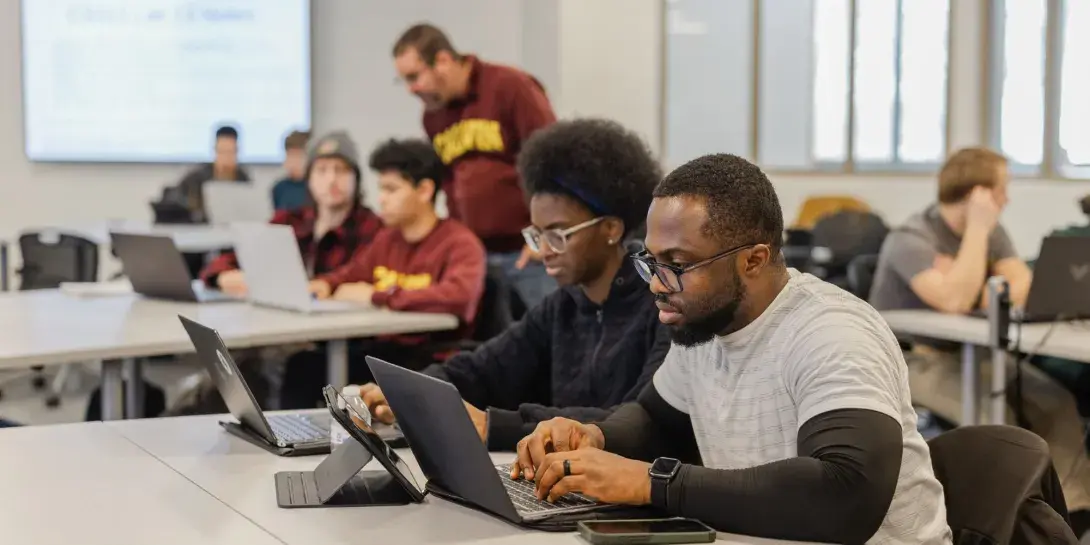
Technology is reshaping nearly every dimension of human life.
“Technologies like AI are shaping ideas about work, education, relationships, and what it means to be human,” said Derek Schuurman, professor of computer science at Calvin University.
Whether or not Christians engage conversations around these emerging technologies is a decision Schuurman says has significant stakes.
He says a technological agenda that’s driven by a faith in technology will lead to consequences, while a pessimistic suspicion of technology will lead to missed redemptive opportunities.
“The stakes are high, and these conversations will proceed, with or without Christian voices,” said Schuurman.
Schuurman and his colleagues at Calvin University believe the conversations must continue with Christian voices and they see immense value in them being led by voices from within the Reformed tradition – a tradition that’s been committed to engaging the intersection of faith and technology for centuries.
“Our tradition calls us to both courage and curiosity about technology and human culture. We have that calling because we believe that God gives technology and culture to us as good gifts,” said Kevin den Dulk, interim provost at Calvin University. “So, the first question for our faculty, students, and alumni is generally not whether something is dangerous or evil. The question is how we can help transform technology or culture in ways that reflect their God-given purposes in our lives.”
Launching from a solid foundation
University leaders say that the university’s deep Reformed tradition, its leadership in faith integration across all disciplines, established and esteemed professional programs, and rich liberal arts expertise, provide it with just the foundation to shape this global conversation.
So, on Thursday, October 8, the university officially announced it will establish the Center for Faith and Technology, an interdisciplinary center that will explore the intersection of Christian faith and technology and provide a leading, thoughtful, credible Christian voice in conversations surrounding AI and other emerging technologies.
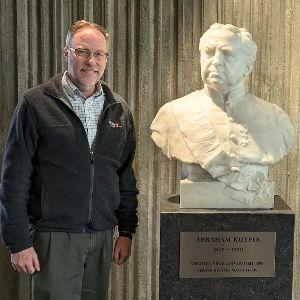
“The hope is that the center will give plausibility to the notion that faith is comprehensive and can inform every area of life,” said Schuurman, who will be the center’s inaugural director. “Through the resources provided by the center, we hope to serve Christians from around the world who are wrestling with what it means to be faithful in a technological world.”
“Whenever we have created a center or institute at Calvin it’s been an opportunity to name and amplify an area where we have already been an established leader for some time,” said den Dulk, who once led the Paul B. Henry Institute at Calvin, one of the university’s 12 centers and institutes.
Building on a longstanding legacy
While Calvin has been a leader in this space for decades, the Reformed philosophical tradition has been considering technology for centuries.
The Reformed “neo-Calvinist” tradition was birthed out of the work of Abraham Kuyper and Herman Bavinck in the early 20th century, but its roots trace back centuries earlier to John Calvin and St. Augustine. Around the turn of the 20th century, Kuyper wrote and reflected on the scientific and cultural developments of his day with insights that can inform our current technological moment.
“Rooted in the conviction that Christ redeems every sphere of life, the Reformed tradition equips us to engage technology in ways that promote human flourishing, seek justice, love our neighbors, and participate in God’s ongoing work of renewal in the world,” said den Dulk.
“The kinds of questions you encounter on campus today are consistent with ones that have been asked here for generations: What does it mean to have a soul? To understand oneself and one’s neighbors as beloved children of God, created in His image? To use tools ethically and for the good of the world rather than for dominion or personal gain? To practice ancient Christian wisdom and love in modern, changing times?” said Katie Day Good, professor of communication. “The technologies change, but the questions still matter.”
“While AI does present unique challenges and opportunities, the philosophical foundations remain consistent,” said Schuurman. “The work done in Reformed philosophy to recognize the unity and diversity in creation and identifying various normative aspects in creation can help guide the design and use of our emerging technologies. Even as we uncover exciting new technological possibilities, the norms for creation and what it means to be human remain fixed and cannot be ignored.”
Leading at Calvin for decades
Throughout the 20th century, reformed thinkers like Hendrik Van Riessen and Egbert Schuurman helped establish important foundations for Christian reflection on technology and culture. And by the 1980s, Calvin faculty scholars, like philosophers Alvin Plantinga and Nicholas Wolterstorff, among others, were at the forefront, shaping and leading conversations about how faith informs culture.
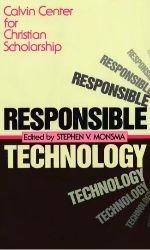
“Calvin has had thriving and accredited programs in engineering since the 1980s and a program in computer science for several decades. From the launch of these programs, Calvin recognized that these areas also mattered for the kingdom and would need a distinctly Christian approach,” said Schuurman. “In response to this, the Calvin Center for Christian Scholarship (CCCS) launched its first project in the early 1980s: a book titled Responsible Technology that drew on insights from the Reformational philosophical tradition.”
This landmark book informed not only Calvin’s approach to faith and technology for many years, but it also influenced many other Christian traditions. It inspired some of the founders of the Christian Engineering Society, which started in 1992, with its first gathering on Calvin’s campus. The book also inspired subsequent papers, articles, and books on faith and engineering and many other engineering programs at Christian colleges and universities in North America have been influenced by conversations started at Calvin.
The vision to continue this influence motivated Derek Schuurman and Gayle Ermer, recently retired professor and chair of engineering, to begin forging a vision for a Center for Faith and Technology.
Expanding and amplifying the conversation
The new center will provide a greater platform for this work to be amplified and expanded, while addressing contemporary questions surrounding AI, digital technologies, and the rapid pace of technological change.
“The hope is that the center will provide a winsome, public, credible, Christian voice on technology issues serving the academy, the church, and beyond by joining the conversation in the public square on the pressing technology issues of the day,” said Schuurman.
Leaders say this could take the shape of conferences, books, articles, blogs, whitepapers, opinion pieces, public lectures, church and curriculum resources, and podcasts that people could turn to and seek out as they navigate technological challenges. The center activities will take various forms, but the “why” behind the work is the driver and has deep roots in Calvin’s mission.
Seeing the stakes are high
“We often use the world ‘shalom’ at Calvin to describe right relationships with ourselves, our neighbors, and the non-human creation,” said den Dulk. “Technology has the power to strengthen those relationships; it also poses the great risk of damaging them in profound ways. At Calvin we see the need to apply both technical expertise and deep wisdom to our use of technology as a way of seeking restoration and wholeness of God’s creation.”
“Few universities dedicate space and resources to sustained inquiry into the relationship between faith and technology,” said Good. “At Calvin, students are encouraged to ask how the tools and technologies of our time might be directed toward the love of God and neighbor, the cultivation of virtues, and the renewal of the world.”
The new center is aiming to cultivate and shape deeper thinking around faith and technology. And the conversation must expand as the stakes are getting higher.
“Technology is not neutral,” said Schuurman, “but rather has substantial cultural, social, lingual, economic, environmental, and justice issues associated with it.”
Leaders behind the creation of the center say many organizations speak about technology, but few do so from a deeply rooted Christian intellectual tradition. Fewer still combine technical credibility with theological depth, educational excellence, and a public-facing mission.
“The question is not whether technology will shape the future. It will. It will also shape us,” said Schuurman. “The question is who will shape technology – and toward what end?”
Those are the conversations Calvin University is ready to lead. Learn more about the Center for Faith and Technology including how to support its mission.


