Calvin engineering students learn by testing real concrete alongside industry professionals
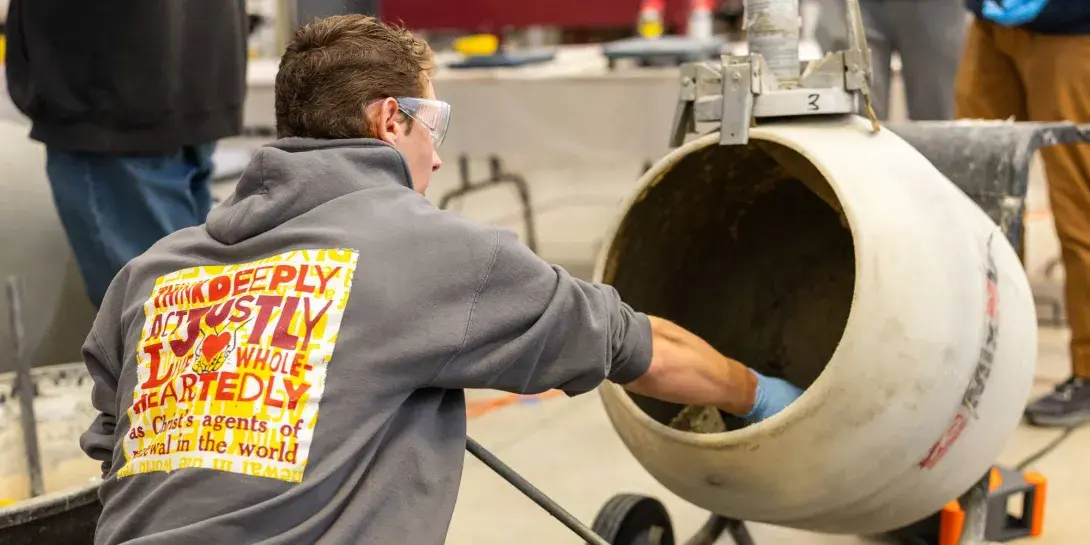
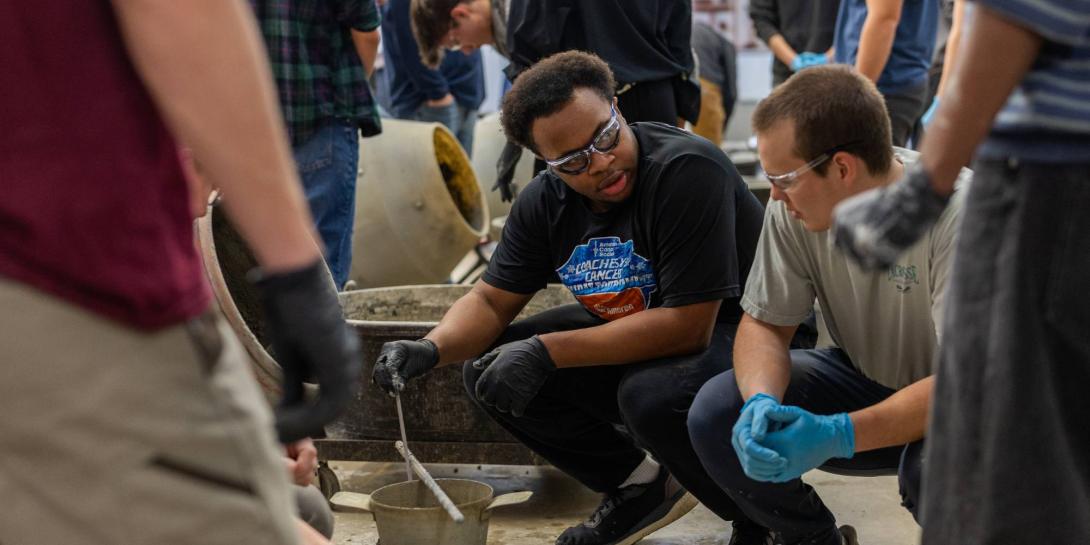
“This is a slump test, which is a measure of the consistency of the concrete,” said Tim Lautenbach ’04.
While Lautenbach is the construction materials testing division manager at Materials Testing Consultants, today he’s volunteering his time at his alma mater, Calvin University.
“Why would we want concrete to be wetter, if that makes it weaker?” asked Lautenbach, who was overseeing a small group of students.
“To be able to mold it,” responded a student.
“You are saying ‘workability.’ Yeah, that’s right,” said Lautenbach.
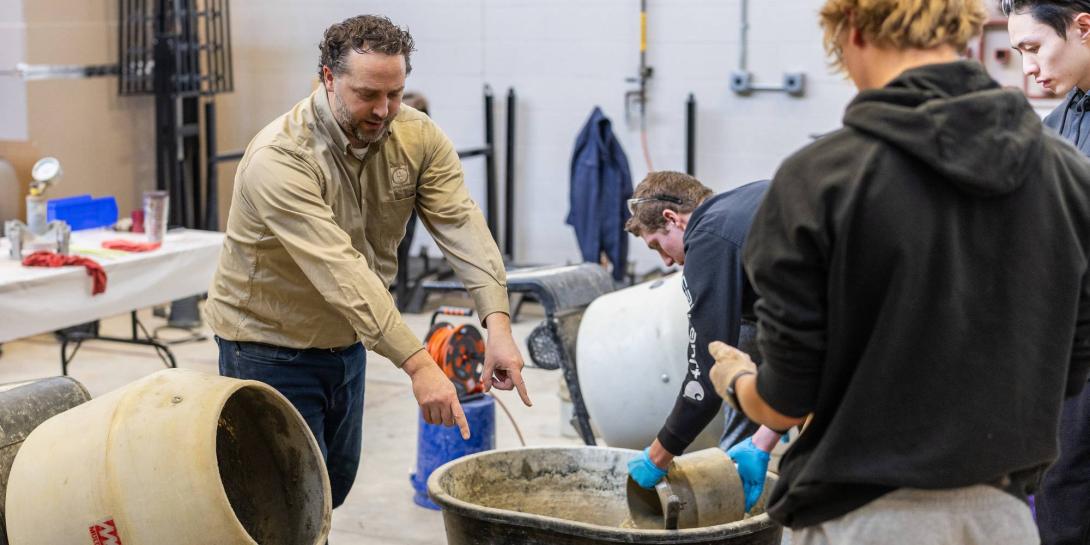
“Everywhere concrete is poured these same tests are being used to make sure the mix we are putting in the ground meets what the engineer has specified it needs to,” said Julie Wildschut, an assistant professor of engineering. “We are following very specific ASTM standards in the testing, and that’s important to know.”
Learning by doing
The concrete lab is part of Wildschut’s ENGR 205 Materials course that combines classroom learning with hands-on application. Students spend time in the classroom gaining understanding about the properties of various materials and how to test each for durability, resilience, and strength. Then, throughout the course, students experience a series of labs where they put their learning into practice.
“This lab is so important because students get a hands-on view of what concrete actually is and how the materials blend together,” said Mark Meddaugh, the director of construction and education for the Michigan Concrete Association, who has volunteered at this lab for nearly two decades. “So, when they are specifying the concrete, they have an understanding of what the actual physical tests in the field are, the compressive strengths, and they get an actual visual representation of what they may be designing in the future.”
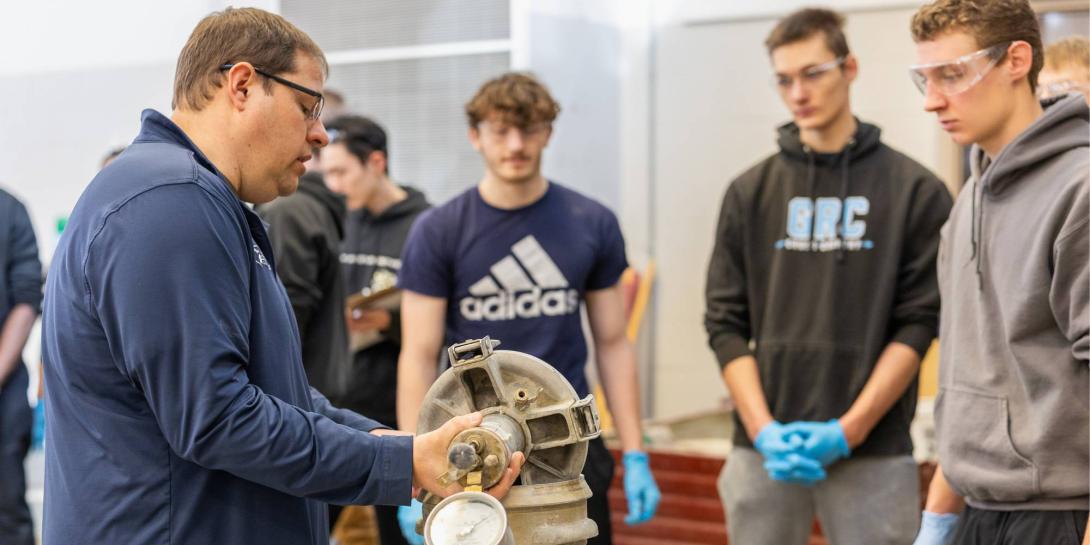
“I’m very grateful for this opportunity,” said Joel Vander Zwaag, who is in his first semester at Calvin studying civil engineering. “I went to community college for a couple of years, and we never had anything like this. This is my fourth week here and we already have professionals coming in showing us how to do everything.”
Connecting with industry experts
Not only do the labs help students draw connections between theory and practice, they also connect students to industry leaders, including Steve Waalkes ’98, executive director of the Michigan Concrete Association, who has been involved with the Concrete lab for almost 20 years.
“This lab was not part of this materials class when I was a student from 1994 to 1998. We did other materials, but not concrete,” said Waalkes. “Concrete is the #1 most widely used construction material in the world … It’s literally the foundation for all of our buildings and transportation infrastructure. It’s used to assist humans, to treat water—both wastewater to make it good for the environment and for drinking water. We need concrete at some point for tanks, for foundations, for lots of different materials.”
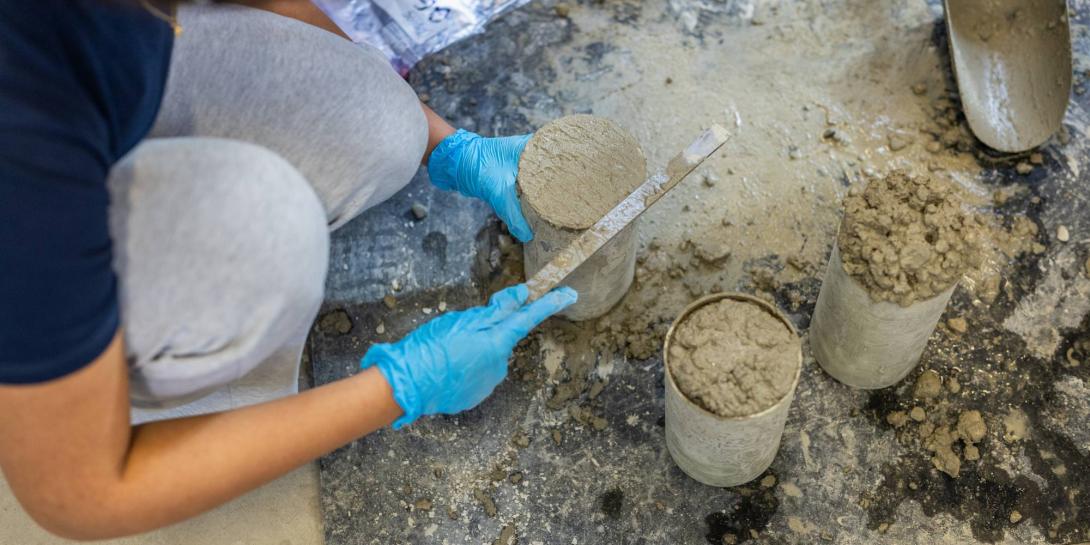
“I’m not a civil engineer, but it’s still interesting to learn about the complexity that goes into all of it,” said Lance Keinath, a junior engineering major. “It was really awesome to see people who care and are willing to spend a little extra time, even with a student who is not in civil.”
Lautenbach, who has volunteered with the Concrete lab at Calvin for 15 years understands the value of these kinds of hands-on learning opportunities.
“Even if a Calvin student doesn’t follow a career path that deals with construction materials, exposure to different fields of engineering can be helpful when deciding which engineering concentration an underclassmen will pursue,” said Lautenbach. “This type of lab helps students learn about the concepts of material quality control testing methods and helps them connect the theory they learn in the classroom to practical application.”
Pouring a solid foundation
Lautenbach and Waalkes also understand that while concrete is foundational to the success of so many structures in society, so too is a Calvin education.
“Calvin makes very well-rounded engineers that have the ability to learn in the future, but also have a broad depth across multiple disciplines,” said Waalkes. “In fact, in my experience Calvin produces good engineers that can write, that can communicate, that have a good moral compass, a good Christian worldview, which is required to be an ethical engineer. I am very proud of the education I got at Calvin, but I’m also proud that they are continuing to promote the program. And this particular lab ... it’s just fun.”
“Being local to Calvin I still run into many of the engineers in my civil engineering graduating class and they are all in positions of leadership in the companies they work for,” said Lautenbach. “I’m proud of that, and happy that my group of Calvin engineers can collectively serve our communities in ways that honor the created world.”


