Why I Chose Teaching: Education Students Share Their Stories
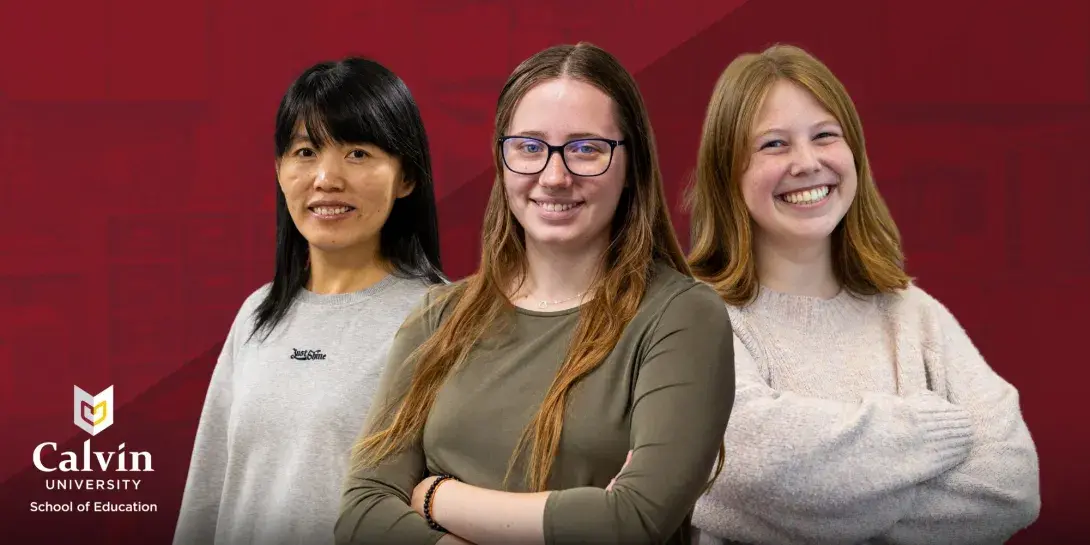
Calvin education students have completed their final internships and are ready to graduate. These student teachers led morning circles, planned differentiated lessons, and discovered what it truly means to shape young lives.
As Lauren Sporte, Xiaoli (Sally) Yang, and Anika Vander Veen finished their education programs, we asked them about why they chose teaching, what surprised them most about classroom life, and what advice they’d give to high school students considering this rewarding career.
Why did you choose teaching?
Lauren Sporte (Caledonia, Michigan): I chose to pursue a career in education because I’ve always loved working with young children. As the second oldest in a family of nine, I spent countless hours playing with and helping care for my younger siblings, which gave me an early appreciation for children’s curiosity and growth. In high school, I participated in a program that allowed me to serve as a teacher’s aide in an elementary classroom for one period each day. That experience confirmed how much I enjoy teaching and inspired me to continue on this path. Teaching also runs in my family—both of my grandparents were teachers, and my mom is a kindergarten teacher—so I’ve grown up surrounded by their passion and dedication to education.
Xiaoli Yang (Shandong Province, China): Teaching has always been more than a career goal for me—it is a calling. I believe education is not only about sharing knowledge or shaping character, but also about building children’s lives with God’s truth. As a Christian teacher, I hope to help students see their value and purpose in God’s plan.
Anika Vander Veen (Zeeland, Michigan): I knew I wanted to work with kids. I love the relational aspect of teaching. I’ve had some great teachers pour a lot into my life, and being able to do that for others made me want to become a teacher.
What does a typical day look like?
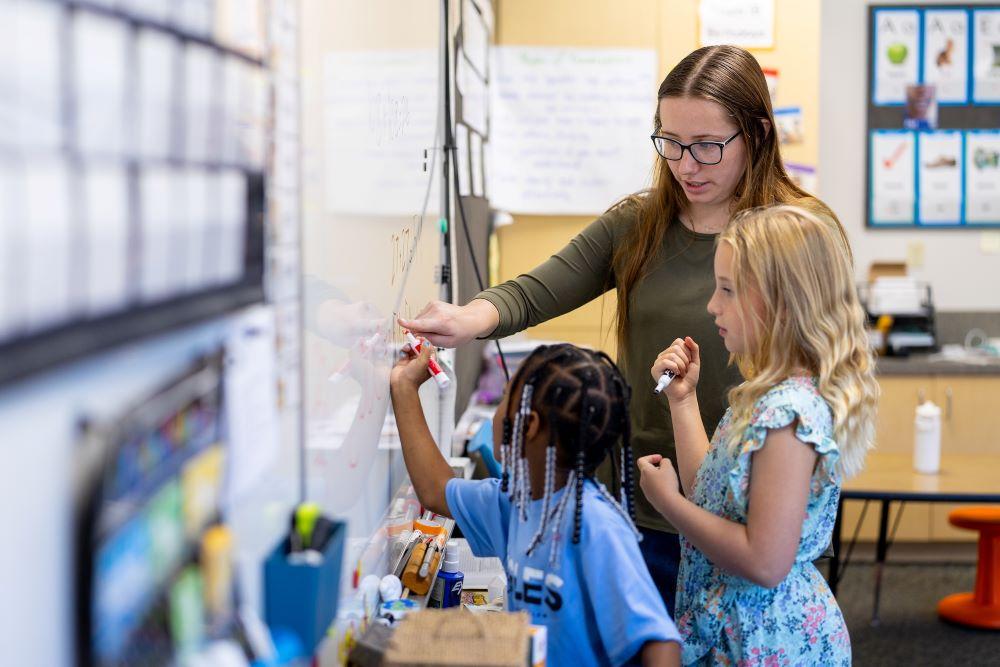
Lauren Sporte, Elementary Education (Pre-K -3 and 3-6)
Lauren: I student taught full-time, spending five days a week at my placement school from 7:30 a.m. to 3:30 p.m. A typical day began with morning work and a class meeting, where we gathered in a circle to greet one another and set the tone for the day. Next, students had specials such as Spanish, P.E., or music. After specials, students had a snack and recess break before returning for English Language Arts, which I taught for about an hour and a half. Then came lunch and recess, followed by math for an hour and Inquiry (science and social studies) for another hour. We ended the day with a read-aloud and a closing circle to reflect and wrap up. The days were busy and full of energy, but they flew by quickly—I truly loved the work!
Anika: At Palmer, I was in a first grade classroom. We’d pick the kids up from the playground, take them inside, and some would finish eating breakfast while others did their morning worksheet. We’d go over that as a class after some time, then move to the rug to read a story and practice our letters, sounds, and sight words. We’d do GoNoodle, have a snack, and do more reading and writing work. Sometimes we’d have a special like art or music. Then we’d go to lunch, get them through the lunch line and help open items like milk and bananas.
What surprised you most?
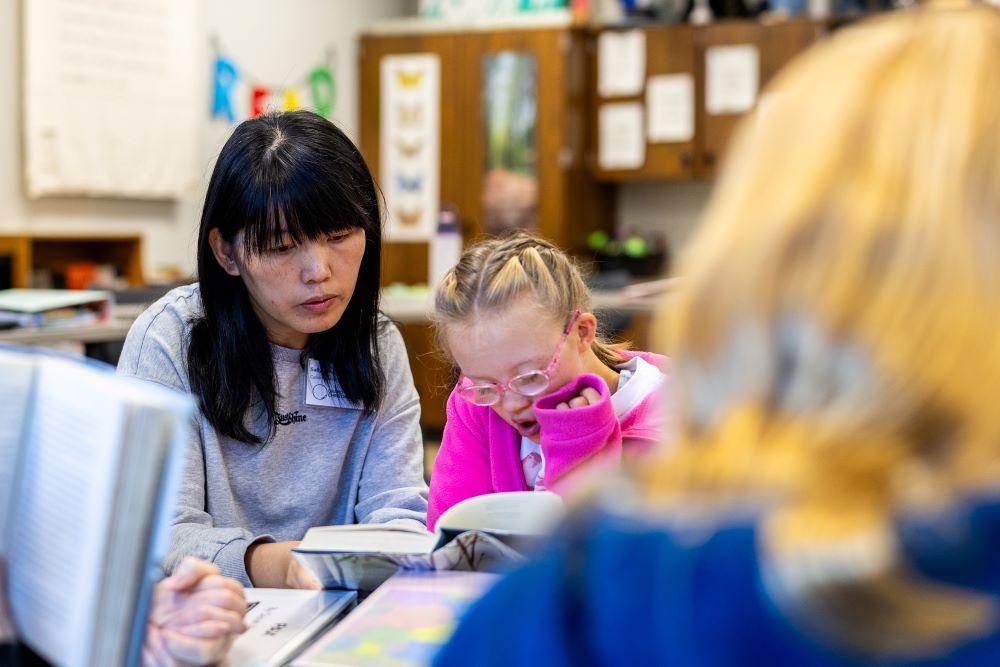
Xiaoli (Sally) Yang, Curriculum and Instruction
Xiaoli: What touched me most was how teachers paid attention to each child’s unique needs. I saw students with disabilities learning alongside their peers and being fully included. Teachers used differentiated instruction and individualized plans so that every student could participate and succeed. It was a living picture of inclusive education—where every child is accepted and encouraged.
Lauren: One of the biggest surprises for me was just how crucial routines and expectations are in the classroom. I taught a combined first and second grade class, and I learned that consistency in routines—such as raising hands, putting away supplies, transitioning between activities, and walking in the hallway—was essential for a smooth and productive day. I was surprised by how much time and patience it took to establish these routines, but also by how much better the day flowed once students had mastered them. Even in November, we were still revisiting and reinforcing some of the same routines we practiced on the very first day of school.
Anika: I was surprised how much I looked forward to GoNoodle and snack time. I know the students love it for a brain break, but I grew to love it as well because it was a time we could all bond through dancing to some silly songs. It was also the time when they shared the most things with me, so I got to know them a lot better during our brain breaks as well. I was also surprised how quickly the relationships formed. We only had 7 weeks at that placement, but we were all sad when it came to an end!
What prepared you best for the classroom?
Lauren: Calvin’s Education program did such a great job preparing me to become a teacher by giving me lots of real, hands-on experiences in classrooms. Over the past four years, I had the chance to be in several different schools, working with students of all ages and backgrounds. One thing I really appreciated about Calvin was how connected the program is with local schools—it made it easy to get real teaching practice through tutoring, leading small groups, and eventually teaching whole classes. I’ve always learned best by doing, so those opportunities meant so much to me.
Xiaoli: Calvin University’s Education program built a strong foundation for me, combining theory with practice. My professors modeled grace and wisdom, reminding me that “wherever you go, bring grace with you.” Teaching is not easy, but it is full of purpose, love, and joy.
Anika: Lots of focus on Universal Design for Learning (UDL) and differentiating instruction was placed in the Elementary Education program. This helped me the most because all students are so different, as are their needs and means of instruction. This tool helped me to plan ahead for different students and differentiate the lessons to work best for each student.
What advice do you have for high school students about pay and workload?
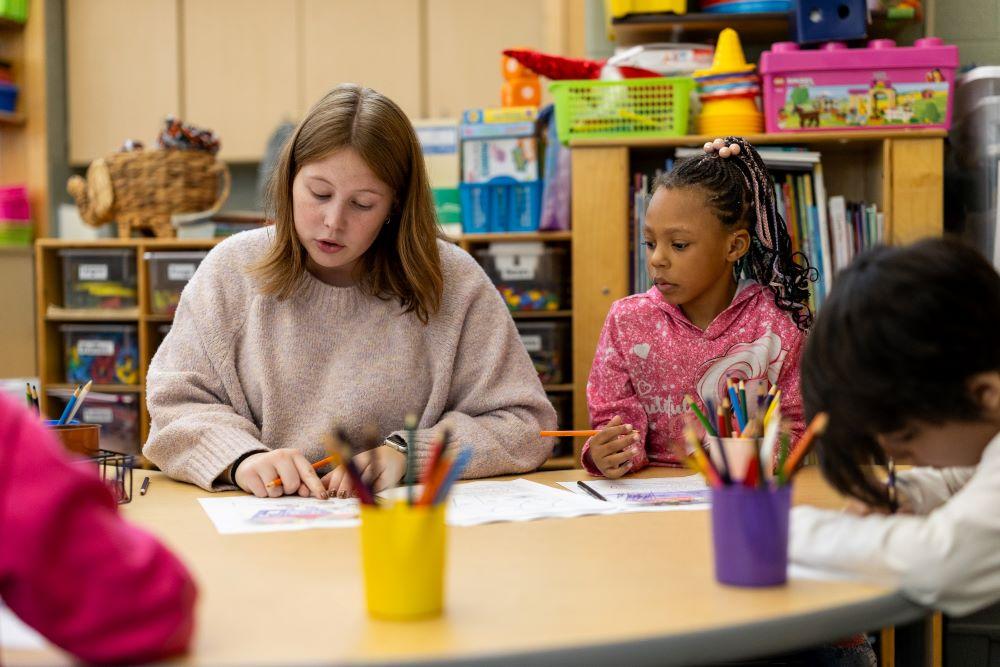
Anika Vander Veen, Elementary Education (PK-6th)
Anika: It’s a well-known fact that teaching is not a high-paying job. If you’re in it for the money, it’s definitely the wrong career. But if you truly love being in the classroom, brainstorming innovative ideas, and teaching and learning from students, then it can be the career for you. All in all, every job has its challenges. You have to weigh what’s important to you in a job and go from there, but also put your happiness before all the tedious “what ifs.”
Lauren: I would tell future Calvin students that even though teaching isn’t known for being the highest-paying job, it’s one of the most meaningful careers you can have. Yes, it can be busy and sometimes overwhelming, but it’s also incredibly rewarding. Teachers make a huge difference in their students’ lives—often in ways they don’t even realize. For many kids, their teacher is someone who provides consistency, encouragement, and a sense of safety every single day. There’s truly nothing like seeing a student’s face light up when they understand something new or feel proud of themselves. Teaching is challenging, but it’s also full of joy and purpose—and I can’t imagine doing anything else.
Looking ahead
Lauren graduates in December 2025 with a major in Elementary Education (PK-6th).
Anika graduates in May 2026 with her Elementary Education degree (PK-6th).
Elementary Education Major: Prekindergarten-Third Grade (PK-3)
Elementary Education Major: Third-Sixth Grade (3-6)
Xiaoli completes her Curriculum and Instruction degree in May 2026.
Master of Education: Curriculum and Instruction


