When the City Went Dark: Remembering September 11
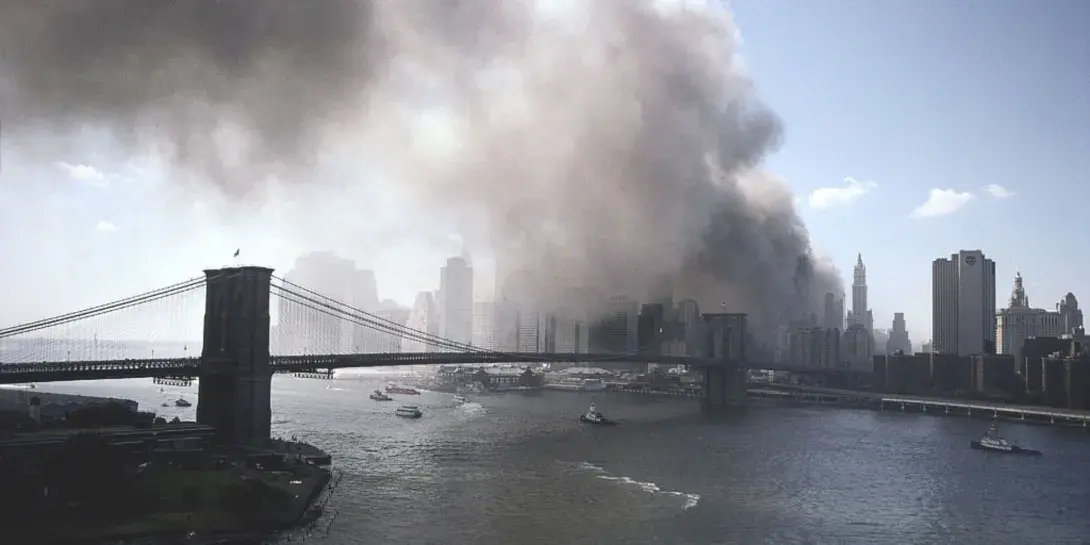
Courtesy: Library of Congress
On a clear September morning 25 years ago, Calvin University’s vice president and senior advisor for special projects Dirk Pruis, was sitting in his office in lower Manhattan when the news began to spread: a plane had hit the World Trade Center.
At first, there was little reason to believe it was anything more than a terrible accident.
He was on the phone with a colleague at Merrill Lynch when they began talking about reports that something had hit the towers.
“People are talking about something hit the World Trade Center,” he remembers hearing.
Planes flew around New York City all the time. Small airplanes. Helicopters. From where he sat at Goldman Sachs’ 85 Broad Street, just a few blocks from the World Trade Center, there was no immediate reason to imagine something more sinister.
Then the television outside his office began showing the burning tower.
He could turn from the television and look out his office window and see the smoke rising from the World Trade Center.
“Right in front of me, all of a sudden the news is just blaring,” he recalls. “You can just see the World Trade Center burning.”
The reality of what was happening would become clear soon enough.
But for him, September 11 was more than the day a terrorist attack changed the United States. It was an intensely personal day in a city he had called home for nearly two decades, a city where he had worked in the World Trade Center, raised a family, built friendships, and developed a deep affection for the people and places of lower Manhattan.
A connection to the towers
His connection to the World Trade Center began more than a decade before the attacks.
After moving from Michigan to New York with his wife, he began working for Touche Ross in 1988. The firm’s financial services center occupied the 93rd floor of One World Trade Center.
He loved it.
The office housed about 200 employees, primarily managers and above, while the firm’s much larger New York operation was located in Midtown. His clients were primarily banks and securities firms located within walking distance of the World Trade Center.
“I loved working in the World Trade Center,” he says. “It was kind of an experience in and of itself.”
After Touche Ross merged with Deloitte Haskins & Sells, the company occupied floors 93 through 101, literally adjacent to his former office.
He spent about five years working in the towers before leaving Deloitte and Touche in 1993 to join Goldman Sachs.
By September 2001, he was working at 85 Broad Street, just a few blocks from the World Trade Center.
He could still see the towers from his office window.
“The world kind of changed”
On September 11, he arrived at work later than usual.
The night before, he had attended a meeting of his church’s administrative board that lasted until around 12:30 a.m. So instead of arriving early, as he typically did, he reached the office just before 9 a.m.
His commute took him on the Path train from New Jersey through the basement of the World Trade Center complex, as it often had.
He arrived at his office and began his day.
Then came the phone call.
At Merrill Lynch, his colleague Keith Babbitt was able to see the towers from his trading desk. When the plane struck, Babbitt could actually see the fire.
From his own office, Pruis watched the television coverage and looked out the window at the same scene.
Then the second plane hit.
That was the moment when the nature of the day became unmistakable.
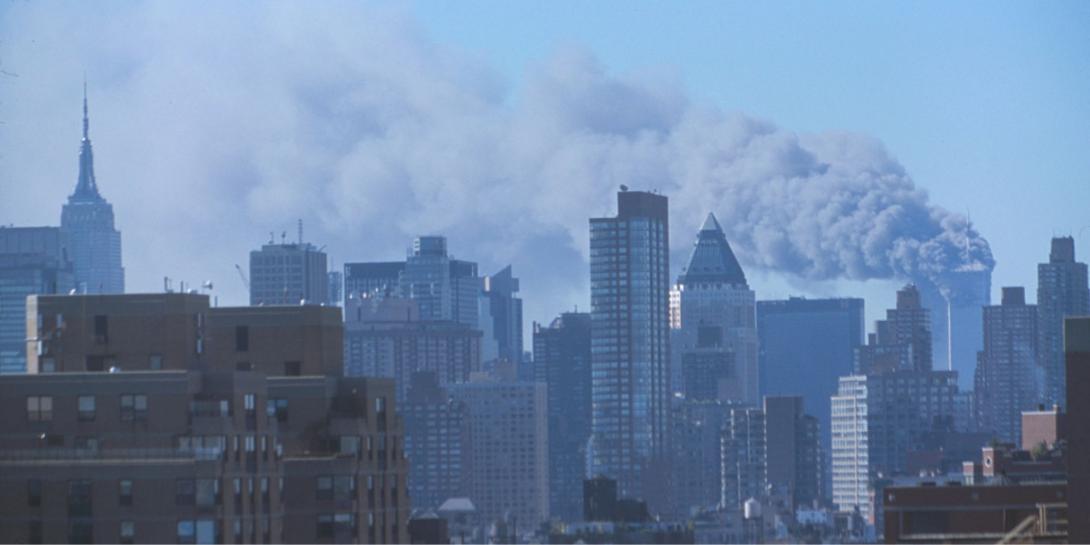
Goldman Sachs occupied space in several downtown buildings, with the vast majority of its New York employees concentrated in two locations, 85 Broad and One New York Plaza. Goldman occupied the top ten floors of One New York Plaza, a building adjacent to Battery Park and close enough to the towers that employees there watched the second plane fly directly in front of them just before impact.
People began evacuating.
At first, Pruis says, the concern was less about personal safety than figuring out what was happening and how people would get home.
Then the first tower fell.
The morning had begun as a beautiful early-fall day, clear, cool and cloudless.
Then, suddenly, it became dark.
The enormous cloud of dust and debris settled over lower Manhattan. With little wind to carry it away, the cloud seemed to blanket the city.
“It literally truly went really dark,” he recalls. “From being really bright.”
Inside his office, dust and debris began hitting the windows.
“Things blew up against my window,” he says. “It was really odd. This dark cloud came, everything went from day to night and it would be like an office memo would just paste itself against my window and fall off.”
A city trying to get out
As buildings evacuated, thousands of people poured onto the streets.
But lower Manhattan’s transportation infrastructure had effectively shut down.
Cell service disappeared. Subway service was disrupted. Roads were clogged or closed.
People began walking north.
Others turned toward the water.
From his office, he could see a small section of the river, and before long he began seeing boats arriving.
It was part of one of the lesser-known stories of September 11: the evacuation of hundreds of thousands of people from lower Manhattan by boat.
“Somebody just had this idea that morning, went out on the radio and said, ‘We need help,’” he recalls.
The response was extraordinary.
Tugboats, ferries, and private boats moved toward Manhattan, carrying people away from the devastation.
For those still inside buildings, however, there was a period of waiting and uncertainty.
At Goldman Sachs, employees were told to stay inside while ventilation systems were shut down. The concern was the enormous dust cloud outside and the uncertainty about what might happen next.
Eventually, the focus shifted to business continuity.
How long would the financial markets be closed? Which employees need to remain? How would the firm operate?
Pruis worked in an e-commerce group that had little immediate business-continuity responsibility. For his team, the biggest question was increasingly simple:
How do we get home?
A ferry ride and a story he never forgot
He eventually left his office around 3 or 3:30 p.m.
Lower Manhattan had begun to clear, but the landscape was almost unrecognizable.
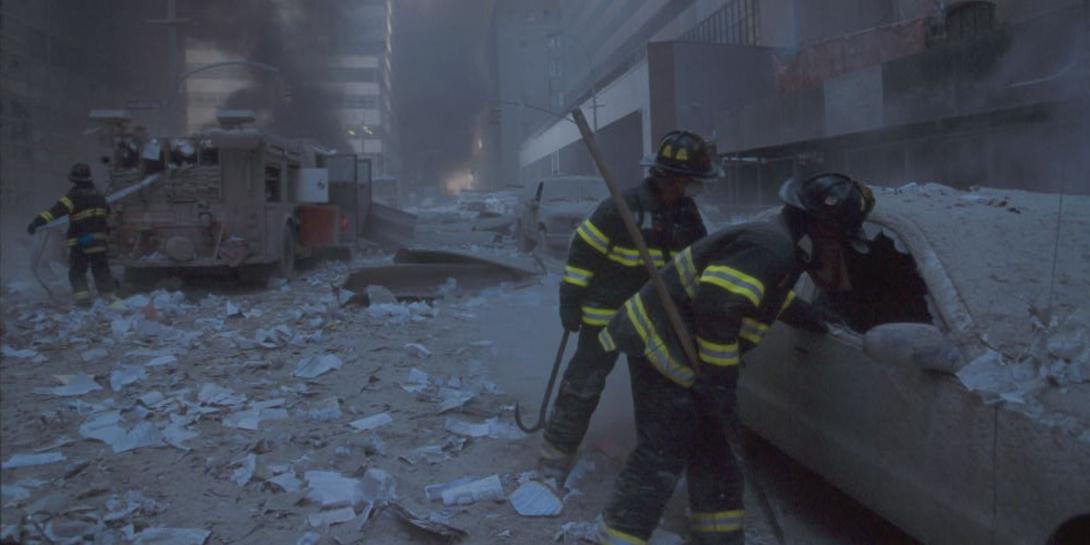
There were several inches of dust on the ground.
“It just looked like a bit of a desert,” he recalls. “Kind of gray, fairly dark.”
He walked toward the Seaport and the ferry terminal, hoping to make his way to New Jersey.
In the elevator down, he met a Goldman Sachs colleague named Chip Carver who ran their interest rate swap business.
The two left the office, walked to the ferry terminal, and boarded the ferry together.
What Carver told him became one of his strongest memories of September 11.
Carver’s next-door neighbor worked for Cantor Fitzgerald, a global financial services firm with offices high in the North Tower. Cantor Fitzgerald had nearly 1,000 employees in One World Trade, and over 650 were killed in the attacks.
Carver’s next-door neighbor was his best friend. The two families lived next door to each other and had children around the same age.
Cantor Fitzgerald had a direct telephone connection with Goldman Sachs’ government securities desk. After the plane hit the tower, the connection remained open.
Those inside knew there was little chance of escape.
Carver’s friend called home, but he could not reach his wife. He left a farewell message, telling her that he loved her.
For Pruis, hearing that story while sitting on a ferry leaving lower Manhattan brought the human reality of the attacks into sharp focus.
“I’ll never forget Chip’s best friend and their collective families’ experience that day. And it was only one poignant story among thousands like it, but it made it personal for me.” For me, that what 9/11 was: incredible stories of so many individual lives that were lost and families changed forever. It was just really hard to imagine and take in... amazing,” he says.
Coming home
While he was trying to make his way home, his wife was in New Jersey caring for their children.
His father-in-law, who with his wife was temporarily living with the family, had been getting a haircut at the barber in Glen Rock a few blocks from their home that morning and returned home after hearing what had happened.
His wife had initially been unaware of the attacks. She was giving their 3-week-old daughter a bath in the kitchen sink when they realized they needed to turn on the television.
Soon, the family’s phone began ringing.
Friends and acquaintances from around the country wanted to know if he was safe.
They weren't the only ones asking.
In his New Jersey community, many residents commuted to New York City each day. As families waited for loved ones to come home, the local train station became a visible reminder of who was still missing.
Cars remained in the parking lot.
In his town, 11 people were killed. In neighboring Ridgewood, 12 people died.
“Then all of a sudden there's all these cars left in the lot,” he recalls. “And you don't think of that, right?”
It was another reminder that the tragedy was not confined to the towers. It reached into communities throughout the region.
A city changed
New York City would begin the long process of rebuilding almost immediately.
The financial markets remained closed for several days before reopening the following Monday, a decision that was viewed as a demonstration of resilience.
Getting to work was difficult.
The subway and train systems were disrupted, and the ferry became an essential part of the commute for thousands of people.
He had recently purchased a ferry pass, which suddenly became something of a golden ticket. With so many people dependent on the boats, getting a physical ticket could mean standing in enormous lines.
The normal ferry terminal in lower Manhattan adjacent to the World Financial Center was inaccessible, so temporary facilities were established along the waterfront.
It would be about a year before the train service was restored.
There was no widespread remote work to fall back on.
There was no Zoom. No Teams. No expectation that employees could simply work from home.
“It's not like it is now,” he says. “You either came to work or you didn’t work, at least not in a meaningful way.”
And lower Manhattan itself remained changed for years.
The area around the World Trade Center was closed off. Construction, legal and insurance disputes and efforts to rebuild continued.
It would be more than a decade before he felt lower Manhattan had truly returned.
Remembering the people
In the weeks and months following the attacks, one of the most visible signs of the tragedy was found on walls, lampposts, and public spaces throughout New York.
Posters.
Families were searching for loved ones.
Even when people were presumed dead, families continued searching for information.
“It was incredible,” he says. “People just were trying to figure out what happened to their loved ones.”
Years later, he returned to the World Trade Center site.
He visited the reflecting pools relatively early after they opened, but it wasn't until this past summer that he visited the 9/11 Memorial & Museum.
He spent much of the day there with his wife while visiting their son, who was completing an internship in New York.
The museum was powerful, but one aspect affected him more than anything else.
The individual stories.
“Thousands and thousands and thousands of stories,” he says.
The museum allows visitors to learn about the lives of those who died, not simply as a number, but as individuals with families, careers, friendships and dreams.
For someone who had worked in the towers and walked those streets every day, the experience brought back people and places he remembered.
But it also expanded his understanding of the tragedy.
The attacks were not only a New York story. There were people at the Pentagon. There were passengers and crew aboard the plane that crashed in Pennsylvania. There were the first responders, families, and communities across the country who were forever changed.
And there was another story that particularly resonated with him: the spontaneous maritime evacuation of lower Manhattan.
Thousands of ordinary people with boats responded to a call for help.
It was, in its own way, an extraordinary act of humanity.
What should we remember?
Twenty-five years later, the students walking across Calvin’s campus were not yet born when the towers fell.
For them, September 11 is history.
For him, it remains personal.
So, what does he want a generation that did not experience firsthand to remember?
His answer isn't about the buildings.
It isn't even primarily about the attack itself.
It is about people.
“There were just unbelievable acts of heroism,” he says. “And the country really came together.”
He remembers the leadership shown in the aftermath, the patriotism that swept across the country and the support for firefighters, police officers, emergency workers and others who ran toward danger.
He remembers the stories that emerged from New York, from the boats that arrived to help evacuate strangers to the countless individuals who helped coworkers, friends and family members.
And he remembers the thousands of individuals lives behind the numbers.
Over time, he says, memories can fade. Younger generations inevitably experience September 11 differently from those who lived through it.
But he believes the stories are worth preserving.
“It’s easy to get lost,” he says. “I just … want to remember the good parts of humanity and the people that came out.”
Twenty-five years later, that may be one of the most important things to remember.
Not only what happened on September 11, 2001, but how people responded.
How strangers helped strangers.
How communities came together.
How ordinary people showed extraordinary courage.
And how, in the middle of one of the darkest days in American history, there were countless acts of humanity worth remembering.