Student research gives voice to how students are really thinking about AI
When conversations about artificial intelligence happen on college campuses, they often center on what technology companies, researchers, or faculty think. But what are students saying?
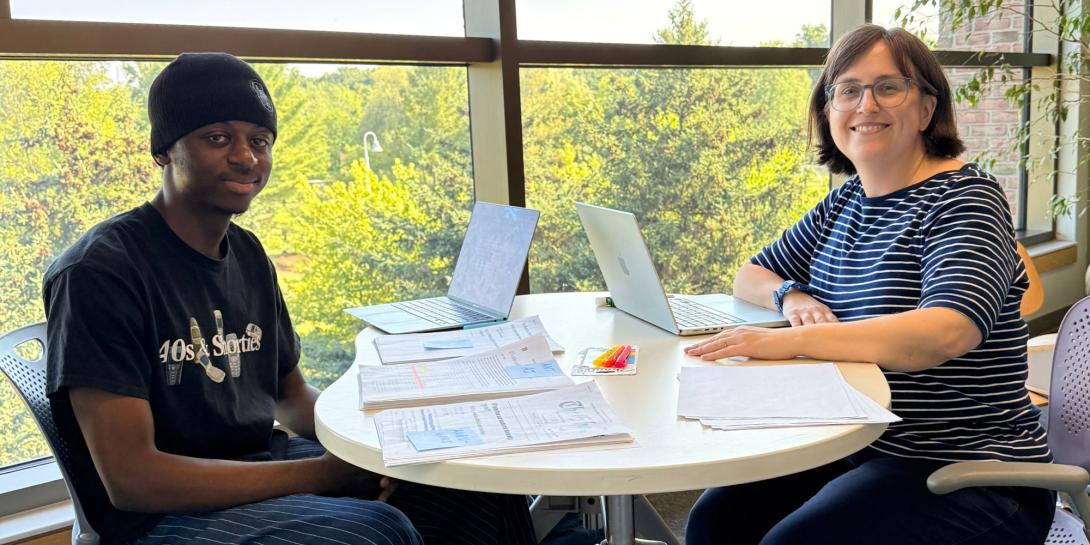
That question became the focus of a summer research project by Calvin University senior David Lafe, a digital communication major, working alongside communication professor Katie Good. Together, they analyzed dozens of student-written opinion pieces and editorials to better understand how students across the Midwest are wrestling with one of the most transformative technologies of their generation.
Presented at the McGregor Fellow Summer Research symposium, the project, The Student Voice on AI: A Survey of Christian College Student Publications in a Time of Technological Emergence, explored not whether artificial intelligence is good or bad, but how students are making sense of it as it rapidly reshapes education and society.
“Everyone has heard what experts have to say about AI,” said Lafe during his presentation. “But have we considered what students themselves are saying about it and how they feel about it?”
Looking beyond the headlines
Rather than surveying students directly, Lafe and Good examined the places where students were already expressing their thoughts: the opinion sections of campus newspapers.
Using AI-assisted searches followed by extensive manual verification, the researchers identified 88 student-authored editorials and opinion pieces from 27 Christian colleges and universities across Michigan, Indiana, Illinois, Ohio, and Wisconsin.
Each publication was read, coded, and analyzed using qualitative thematic analysis, allowing recurring ideas, concerns, and hopes to emerge naturally from the students’ own words.
“The opinions students express today are especially valuable because AI is still emerging in educational settings,” said Good. “We're witnessing students actively negotiating what this technology means before its use becomes fully normalized.”
Wrestling with opportunity and uncertainty
One of the clearest findings was that students have not reached a consensus on AI.
Among the publications analyzed, over half leaned against AI or expressed significant concern about the technology. Less than a third took a more optimistic view. Fewer than 10% of the publications used explicitly Christian theological language to make their case about AI, and of those, the majority expressed concern about it.
Instead of finding simple support or opposition, the researchers discovered thoughtful debates over how AI should and should not be used.
One recurring theme centered on human agency versus AI dependency.
Students who supported AI generally viewed it as a powerful tool when used ethically and responsibly. They argued that students should learn to use AI well rather than avoid it altogether.
Others worried that the technology's convenience could gradually replace critical thinking, writing, and genuine learning. Many expressed concern about academic dishonesty and becoming overly dependent on AI for tasks students should learn to perform themselves.
“The debate wasn't simply about the technology,” Lafe explained. “It was about how humans choose to use it.”
What makes us uniquely human?
A second major theme examined whether AI might eventually replace uniquely human abilities.
Across majors, from philosophy to computer science, students questioned what skills will continue to distinguish people in an AI-driven future.
Many expressed concern that artificial intelligence is moving beyond automating routine work into creative fields such as writing, music, photography, and visual art.
Yet even students who worried about AI's growing capabilities often concluded that human judgment, ethical reasoning, compassion, creativity, and relationships remain qualities machines cannot fully replicate.
Some students framed those beliefs through a distinctly Christian lens, arguing that technology should always be used in ways that honor God and preserve human dignity.
Others admitted they were still wrestling with the implications, revealing both hope and anxiety about the future.
Building the scholarly conversation
During the presentation's question-and-answer session, audience members explored whether student perspectives might differ in other parts of the country, how opinions varied by academic major, and how Christian theology shapes conversations about AI.
Lafe acknowledged that the project represents only a starting point.
“We're just getting the ball rolling,” he said, noting that expanding the research to additional regions and institutions could reveal new perspectives as AI adoption continues to accelerate.
Research with lasting impact
The project will contribute to a presentation at Calvin University's Wisdom in the Age of AI conference in Fall 2026 and will also serve as the foundation for a peer-reviewed journal submission in critical information and technology studies.
Good says the research demonstrates the importance of listening carefully to the people who will inherit an AI-shaped world.
Much of the conversation around artificial intelligence focuses on its impact on students. This research shifts the conversation, asking an equally important question: How do students themselves believe AI is reshaping education, society, and their own futures?
In an era when artificial intelligence is changing almost daily, Lafe believes one conclusion is already clear.
“The opinions and values of students matter now more than ever,” he said. “They're preparing to enter an AI-saturated future, and they're actively trying to understand what kind of future they want to help create.”
About McGregor Research Fellows Program
For more than 25 years, Calvin University's McGregor Summer Research Fellowship has paired exceptional students with faculty mentors to tackle meaningful questions in the arts, humanities, and social sciences. Established in 1999 through a grant from the Detroit-based McGregor Fund and now sustained by the generosity of private donors, the program gives students the opportunity to conduct original research while working alongside expert faculty.
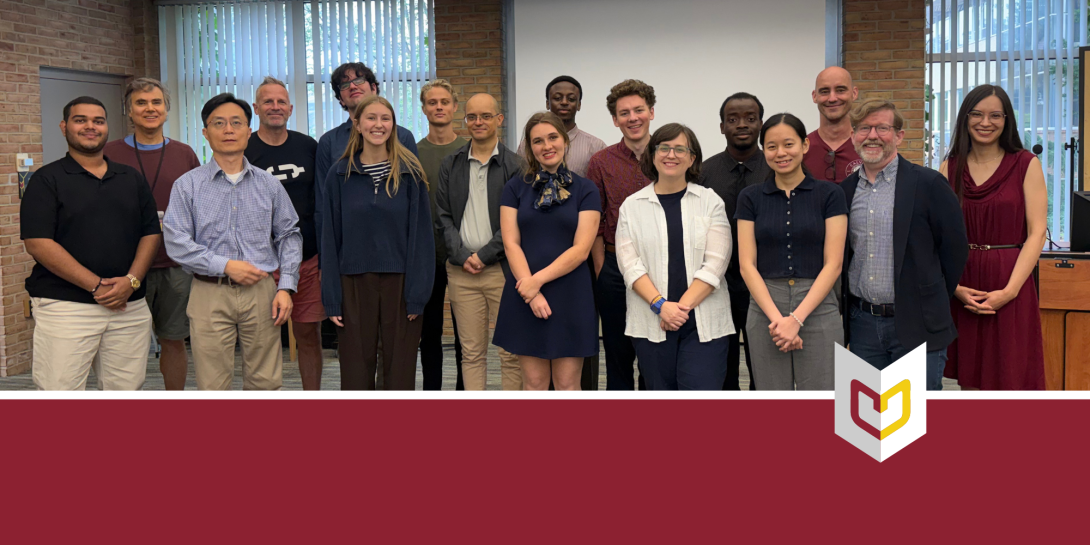
This summer's fellows explored a wide range of topics, everything from using artificial intelligence to teach early Christian studies to the influence of John Milton on C.S. Lewis, to the role of student voices in emerging technologies Topics related to economic development, architecture, philosophy, and sociology were also explored. Their work culminated in presentations to faculty and staff, showcasing the depth of scholarship and curiosity that define the McGregor Fellowship experience.


