One conference. One day. A clearer future.
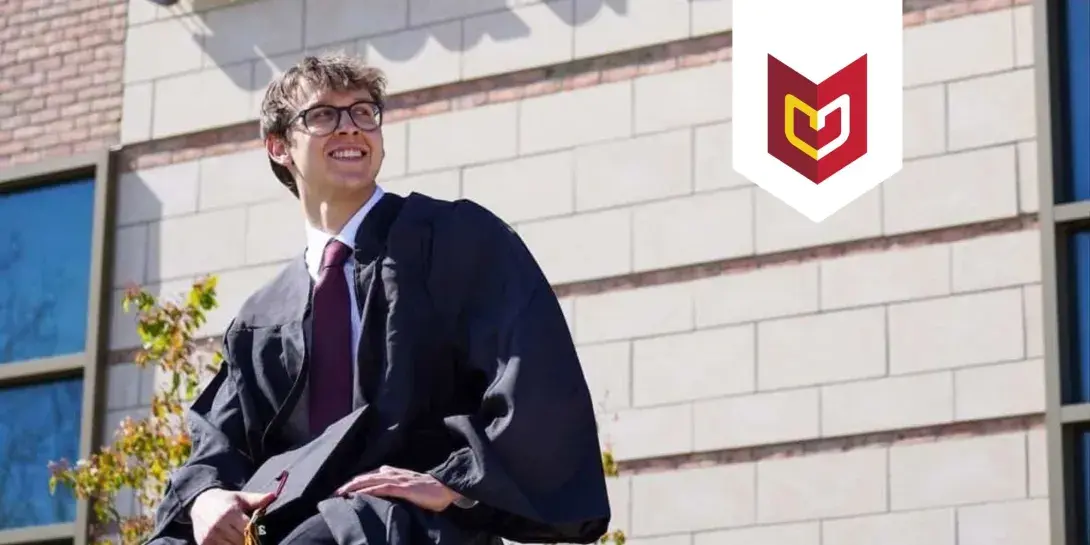
By 8 a.m., senior David Terpstra was already balancing a plate of breakfast and a notebook, surrounded by hundreds of supply chain professionals. It was his first industry conference, and by the end of the day he'd explored artificial intelligence, sustainability, and cutting-edge manufacturing systems, all while discovering something even more important: he belonged in the conversation.
It wasn't the path he expected.
Terpstra came to Calvin planning to study finance. Then marketing caught his attention. Finally, after realizing he could add supply chain management without delaying graduation, he decided to give it a try.
"I've actually just fallen in love with the supply chain program," he said.
That wasn't because of textbooks or lectures. It was because Calvin's discussion-driven classes challenged him to think critically, solve real problems, and defend his ideas, the same skills he would rely on at the conference.
Learning what the future looks like
One keynote focused on artificial intelligence, but not in the way Terpstra had expected.
Rather than predicting AI would replace workers, the speaker compared it to the arrival of computers decades ago, a tool that changes how people work, not whether they work. The presentation itself became proof. Every slide, including the images, had been created with AI the day before.
For Terpstra, it was a glimpse into the future of an industry that's evolving faster than ever.
Seeing the bigger picture
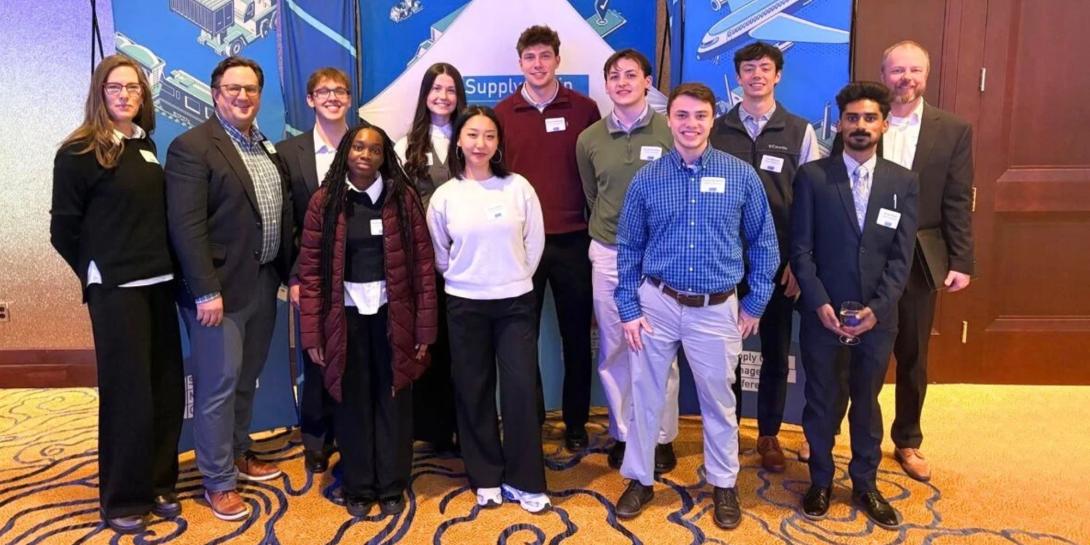
Between keynote sessions, students visited company exhibits where businesses demonstrated the technologies reshaping modern supply chains.
One concept stood out.
Called a "digital twin," the technology creates a virtual model of an entire operation, from product design through manufacturing and delivery. Users can zoom into individual processes or step back to see how every part connects.
Terpstra had heard the term before in class.
At the conference, he saw how companies are using digital twins to train employees more efficiently, improve production, and solve problems before they happen.
What had once been a classroom concept became a real-world solution.
More than a networking event
The learning didn't stop when the presentations ended.
Terpstra attended a breakout session led by Steelcase that explored how supply chain decisions can reduce environmental impact and move companies toward zero-carbon operations. It reinforced something he'd already begun learning at Calvin: every business decision affects people, communities, and creation.
Some of the most meaningful moments happened between sessions.
Conversations with classmates about careers, internships, and a shared class project strengthened relationships that would continue long after the conference.
"It was a full day," Terpstra said. "But those conversations made us more comfortable working together and helped set our team up for success."
Prepared for what's next
For Terpstra, the conference confirmed he had chosen the right field and the right place to prepare for it.
He left with a deeper understanding of emerging technology, sustainable business practices, and the interconnected systems that keep the global economy moving.
Most of all, he walked away with confidence.
"We're in it together," he said. "Every person adds some kind of value to the supply chain process… we need each other to move forward in the economy that we live in."
That's what a Calvin education is designed to do. It equips students with the knowledge to solve complex problems, the experience to contribute on day one, and the Christ-centered perspective to lead with integrity in a rapidly changing world.
Because Calvin is where Christians launch their careers and begin making a difference long before graduation.