How experiential learning changes the way students see Michigan winter
“Winter break for me and other international students is a waiting period for the next semester,” said June Han, a second-year Calvin University student from the Dominican Republic.
For those few weeks between semesters, Han ‘28, a biology major with a minor in art, says she feels a bit stuck: “I usually stay inside and try and stay warm. I would look out the windows and be discouraged to go outside.”
For many students, they could view this as the “dead of winter,” but a two-week course in early January brought “winter to life” for Han and her peers and new perspectives on the season.
Diving into new adventures
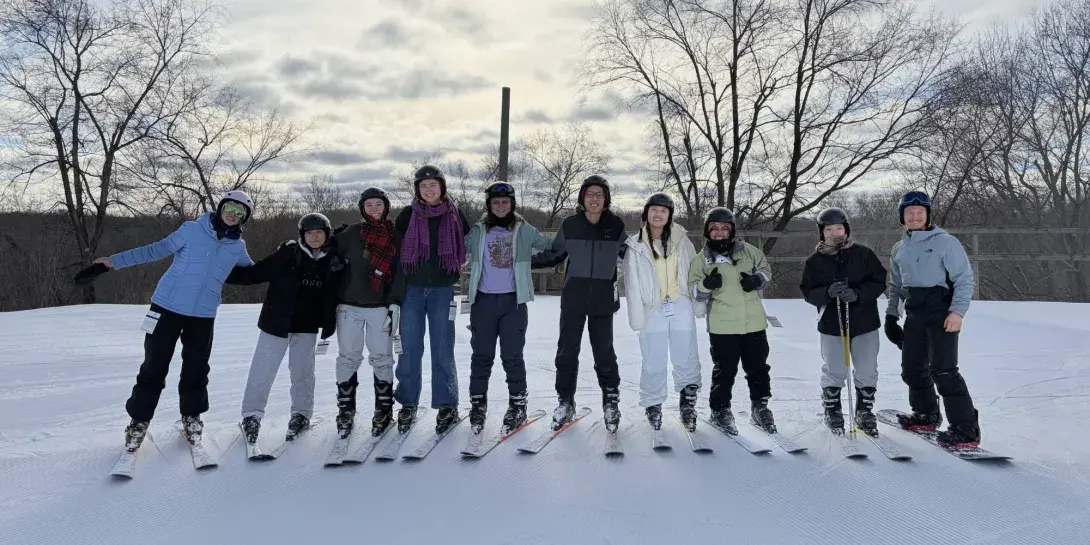
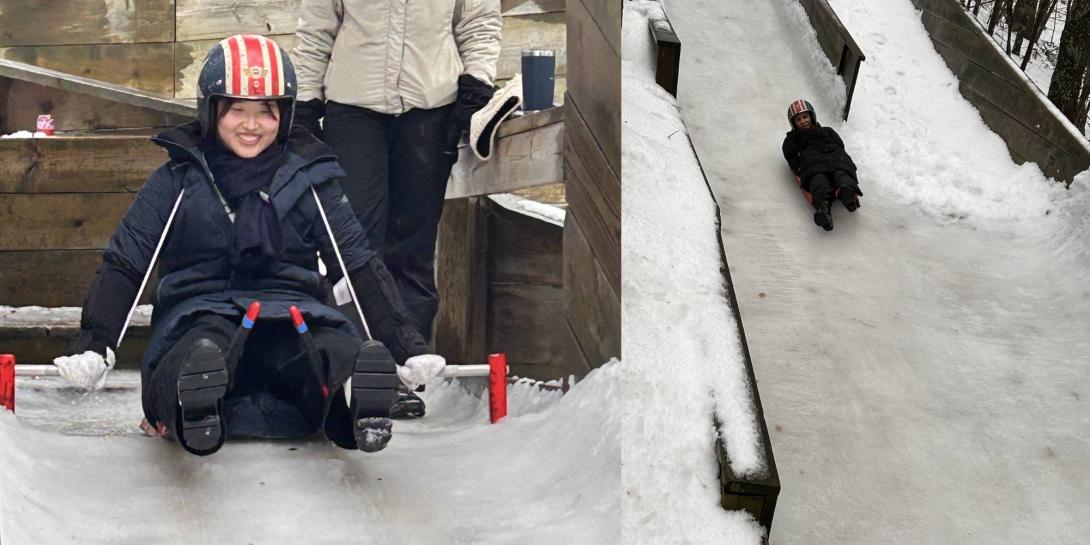
From skiing to snowshoeing, luging to ice skating, trekking through an old-growth forest to building quinzees, students in “Biology 113: Life in Winter” discovered the beauty of creation and the joy of new adventures.
“I had never skied before. I wondered how people can do this. It seemed so scary as your feet are bound to these very long poles,” said Han. “Now that I’ve done this, I want to do this every winter with my friends. I’ve gotten tastes and can see how people enjoy this activity in cold winters.”
Pushing past discomfort, discovering joy
A key aspect of the class was experiencing new things, entering into uncomfortable spaces together, and seeing the joy that naturally emerged.
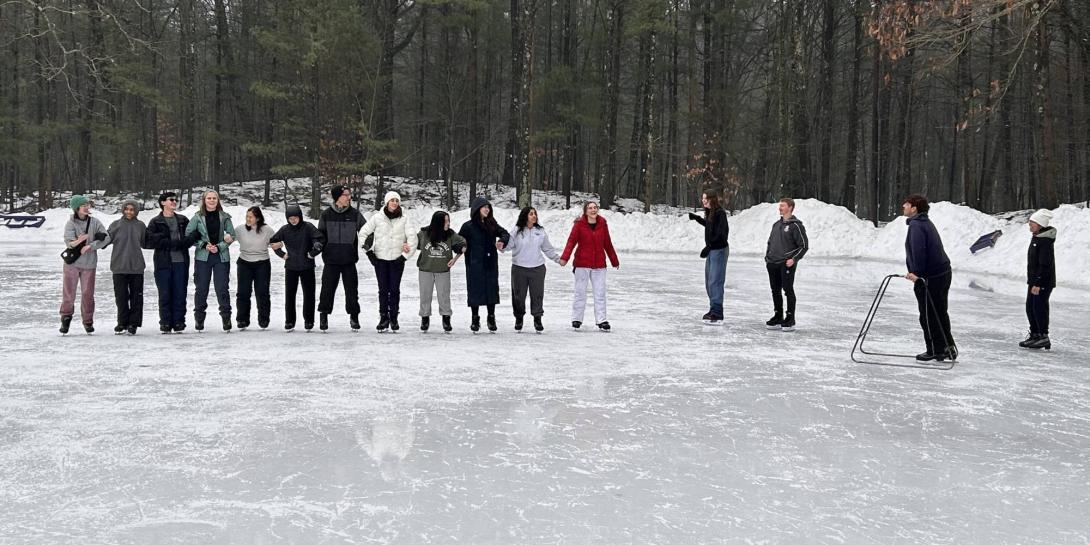
“When we were out ice skating, no one was really good at it. I remember sitting back resting because I had fallen a couple of times and looking around to see everyone with a smile on their face, laughing, helping one another,” said Dave Warners, a biology professor who co-taught the course. “When we get out of our comfort zones together, there’s something powerful that happens—it pulls us together. There’s a joy that emerges. It’s kind of like going to kindergarten for the first time—you’re so excited, not sure what you are getting into, everything is new.”
As part of the class, the students spent two nights in northern Michigan at the Au Sable Institute. There, they experienced a number of new outdoor activities, learned about the remarkable adaptations that allow organisms to survive, and about how people in snow-dominated cultures survived the great outdoors. The class even built quinzees, which are shelter structures that indigenous people in Alaska and northern Canada would construct out of snow. Some of the students even attempted to sleep in them. Han made it until 2 a.m. Only one student made it all the way through the night.
Inspiring awe and wonder
But, perhaps one of the greatest discoveries from the two-week course came at the microscopic level. Randall DeJong, one of the professors who co-taught the course dug in with the class into how snowflakes form, how each can be different than the others, the chemistry and the physics of snowflakes, and then they looked at them under the microscope.
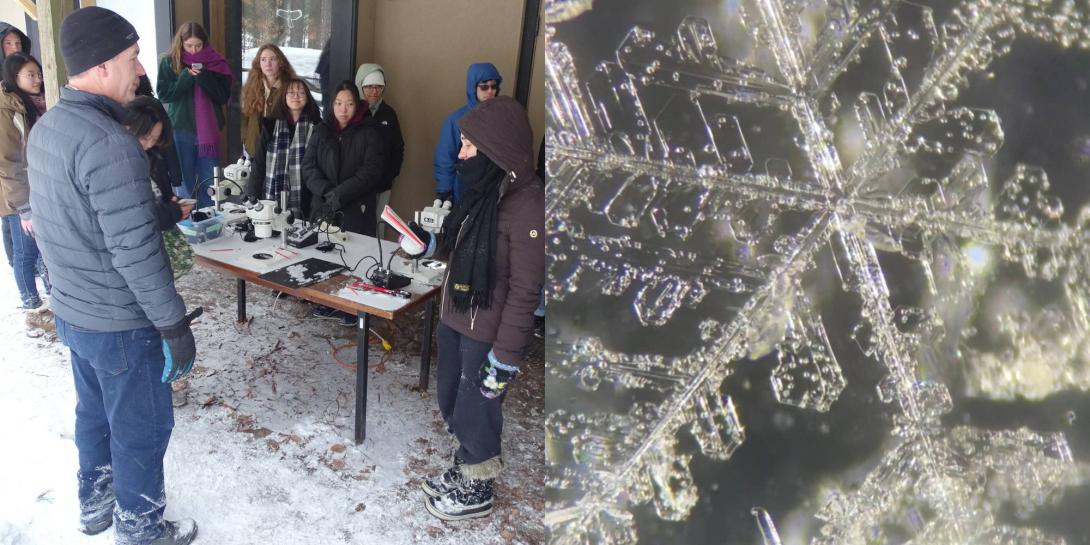
“The details on a snowflake, it’s like ‘wow!’ said Han. “When you aren’t looking at them under a microscope, they are just white fluff, blobs. But, under a microscope, they are so detailed. There’s a reason why each line grows that way—it’s just fascinating.
Connecting with the Creator and creation
In the end, students ultimately discovered that there’s life beneath the surface of a season that can sometimes feel so isolating.
“I started the course off on the first day with a devotional,” said Warners. “I said something like ‘when we stay indoors all winter and sequester ourselves away from God’s creation, there’s a whole area of God speaking to us through the creation that we miss out on. So, we are unable to learn about God through God's general revelation in winter, thus giving us a limited picture of God. We also limit ourselves from experiencing joy in the winter that’s impossible when we just stay indoors.’”
The goal of the course, then, according to Warners was “that students would gain some deeper insights into the Creator and learn new things about the creation that they just can’t learn in spring, summer, or fall.”
By the testimony of students like Han, mission accomplished.
“This class made me see winter differently. There’s life that’s still active, it just looks different, and you just need to know what to look for,” said Han.