Calvin Remembers Dóra Sallay
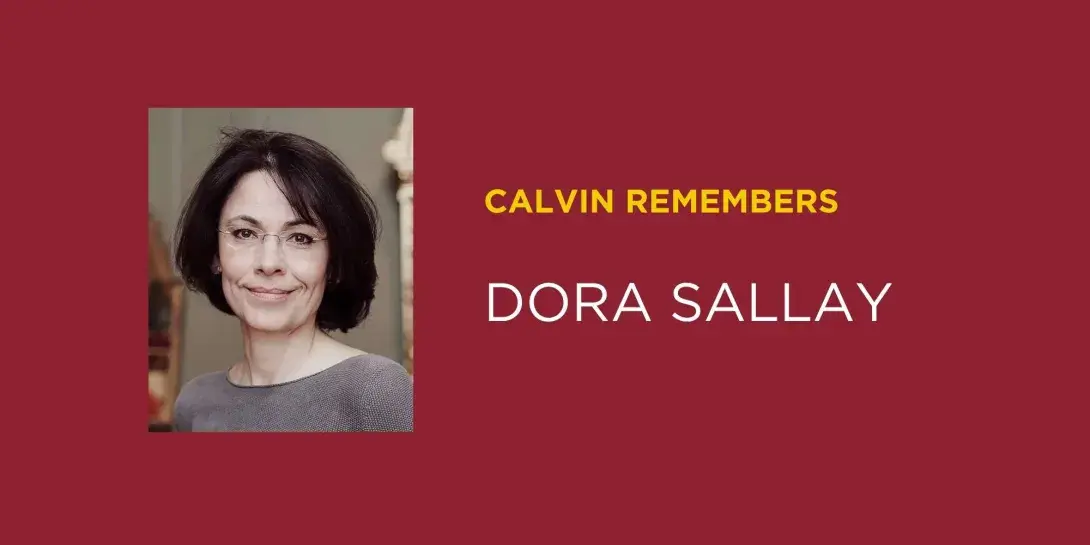
What does it look like to live wholeheartedly—to do something with complete sincerity and enthusiasm, without reservation or hesitation?
It seems that Dóra Sallay’s life was a masterpiece in this virtue.
“Her character is her true legacy: a strong, passionate, kind, and generous woman who lived wholeheartedly in all she did,” said Olivia Tuit ’25, who had Sallay as a teacher during her study abroad.
Since 1997, Sallay ’92, who was the curator of early Italian paintings at the Museum of Fine Arts in Budapest, Hungary, taught an Italian Renaissance Art course for Calvin students in its Semester in Hungary program. She died earlier this month.
“She was a prominent museum curator at the highest echelon among Hungarian art historians, yet always took time to teach undergraduate students from Calvin University,” said Mark Bjelland, who led a semester abroad in Hungary.
Driven by curiosity
Jim Vanden Bosch, an emeritus professor of English at Calvin, estimates Sallay taught dozens, if not hundreds of Calvin students over the years. While he witnessed her wholehearted dedication to her craft and to her students in 1999 when he led the semester program in Hungary, he first saw seeds of her drive and insatiable curiosity when she arrived on Calvin’s campus as a student in the late 1990s.
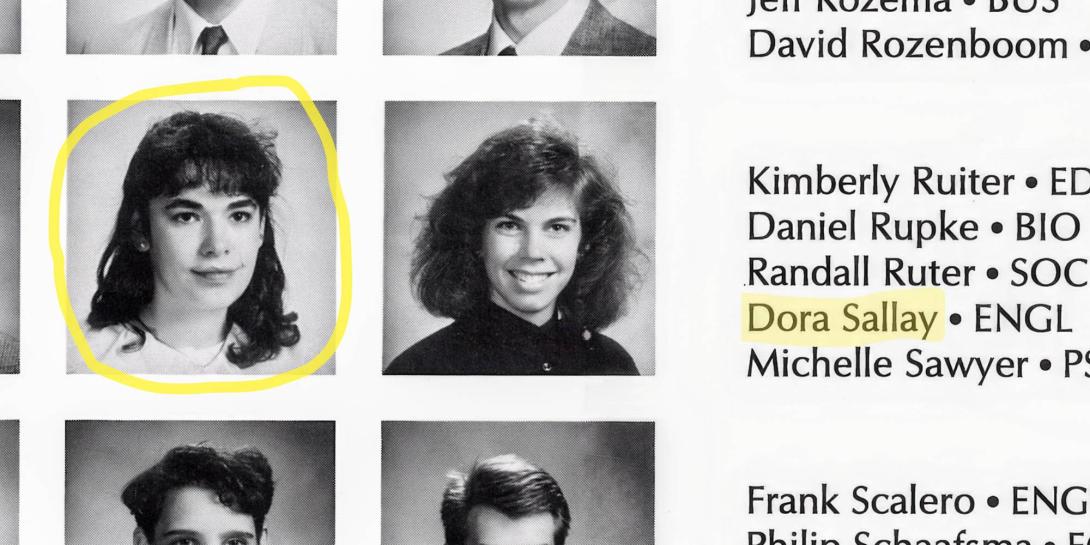
“She was assigned to my section of English 101. English was her fifth language, after having already learned Hungarian, Russian, German, and Italian,” recalls Vanden Bosch. “By the end of the semester, she earned the highest score in the grammar test that everyone in the class was required to pass.”
VandenBosch said that very same year, she became interested in art history, and she showed the same energy, discipline, and enthusiasm for her studies in that field—something she’s carried forward in her career as a curator and as an educator.
Pursuing her passion
“I loved listening to her speak so passionately about her discoveries, almost like an art detective,” said Tuit. “She had a genuine excitement for uncovering meaning and sharing it with others.”
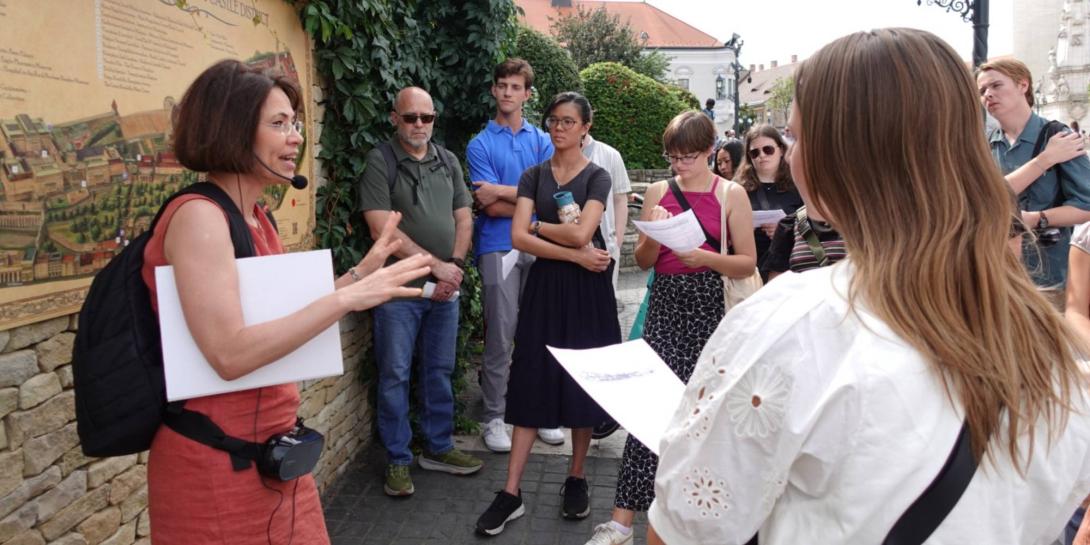
“When she was guiding us on architecture and urban history tours of Budapest, she walked so briskly that some Calvin students had trouble keeping up,” said Bjelland. “I think the spring in her step reflected her unbridled enthusiasm for her work and for her city.”
Providing unparalleled access
She could certainly cover a lot of ground in short order, but she also knew when to slow down, dig in, and invest more time.
“Her enthusiasm for art was clear, and when we went to museums with her, she modeled spending a lot of time with a few pictures rather than racing through many of them,” said Peggy Goetz, who led a semester abroad program for Calvin.
“While teaching in the discipline of her passion and great expertise, she gave our students an inside peek to the operations of the Museum of Fine Arts, Budapest,” said Brian Cawley, who led the 2023 Semester Abroad.
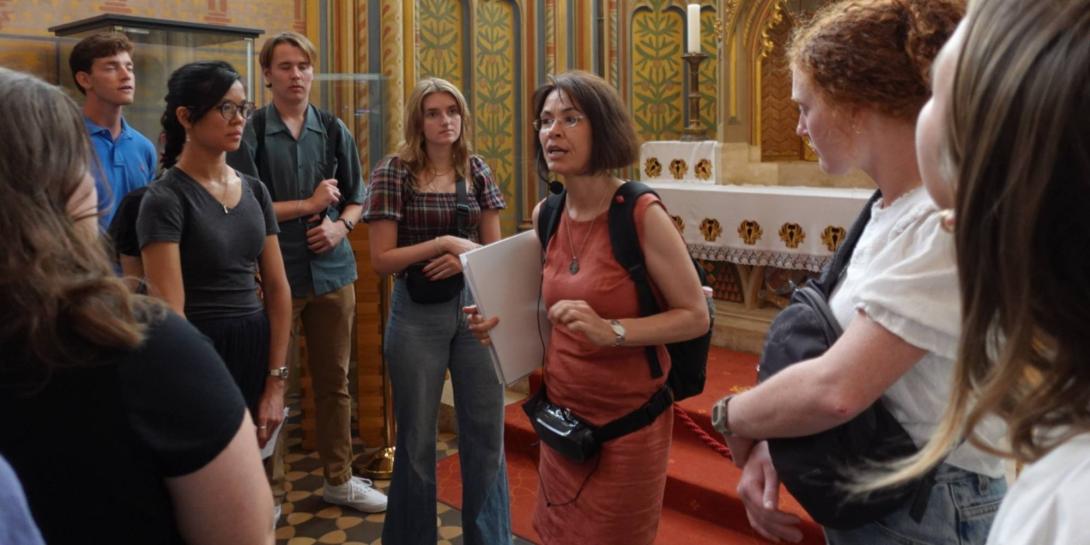
“She even brought our class behind the scenes at the museum she worked at as a curator, allowing us to see restoration work up close,” said Tuit.
Fueled by her faith
Those who were able to see Sallay’s life up close, even for just a semester, saw her live out her faith through the way she pursued excellence in all she did and in how she appreciated the beauty of languages, art, culture, and people.
“She had a profound appreciation for beauty, not only in her work, but in its connection to her faith,” said Tuit. “I think she could see beauty in the people and artifacts around her; in the puzzles they created and stories they carried.”
“It was clear to us students that she loved teaching, and was highly motivated to share her love with us,” said Grace Cheong ‘26.
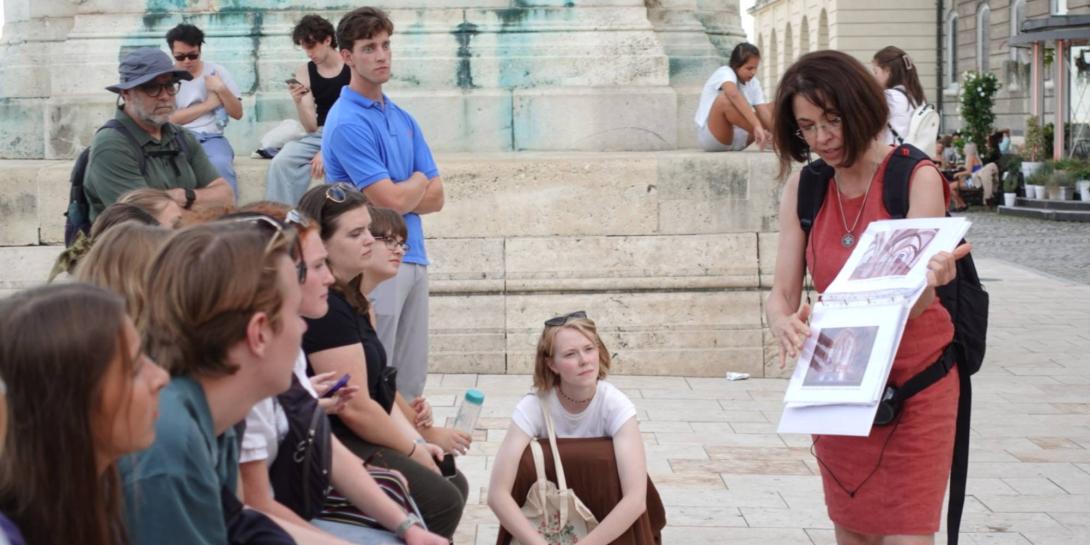
“Her legacy is her impact on students and professors with her passion for her country and people, her knowledge and love of art, and her love for and faithfulness to God,” said Cawley.
“She was a person whose depths you could not fully plumb, even if you worked her field or saw her faith; there was always something more to be perceived and understood,” said Cheong.