Commanding Change, Compassionately
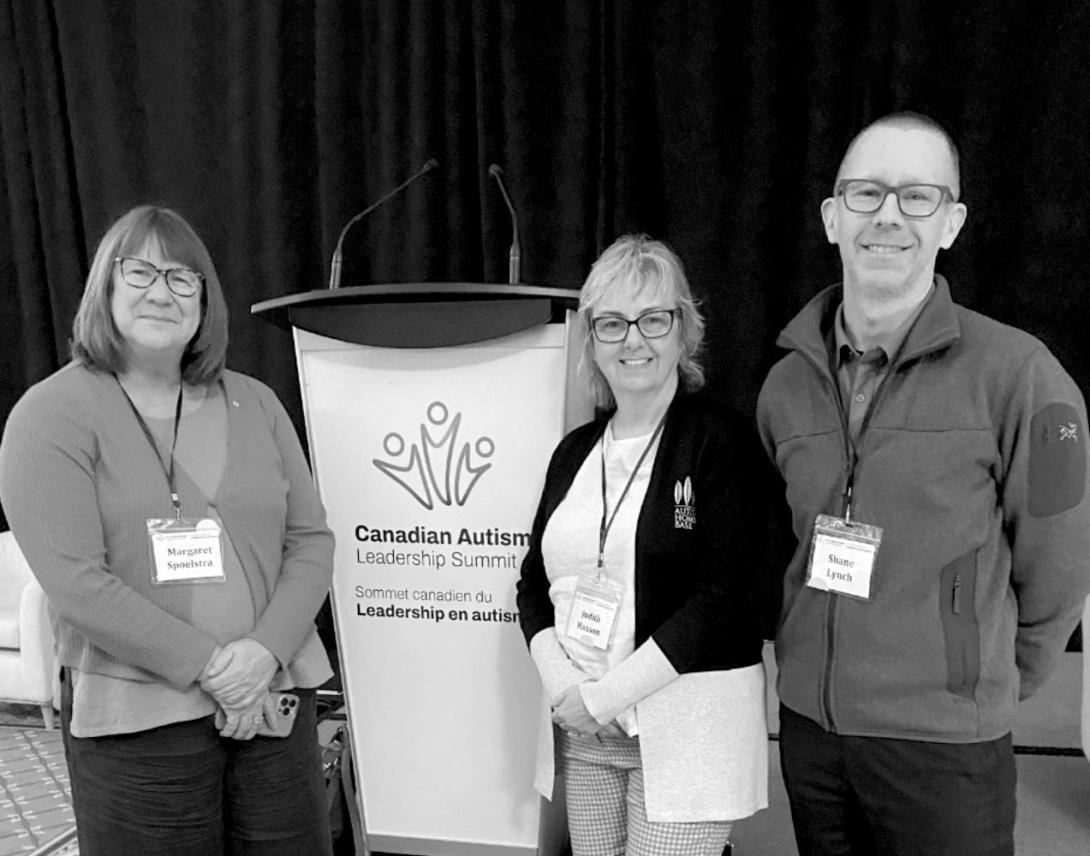
Left of photo: Margaret Spoelstra '80
When I think back on it, my career journey really started with softball,” says Margaret Spoelstra ’80. She remembers her two coaches—“who smoked, wore lipstick, and were not afraid to play good softball”—inviting the team to work at a summer camp for children with disabilities. “They were very civically minded. They said, ‘You have a responsibility to give back to your community.’ And that started my journey in autism.”
Autism Ontario
Spoelstra is the chief executive officer of Autism Ontario, an organization entering its 52nd year that serves over 50,000 autistic individuals and their families across the province both in person and online. With a staff of 250, the organization supports families, hosts community events, partners with government leaders to impact policy, and builds public awareness and acceptance through educational resources.
“Autism Ontario was founded by parents who said, ‘We need to make changes, and the status quo is unacceptable,’ ” Spoelstra says. She notes that parents of children with disabilities are often the first catalysts for reform but also need help supporting their loved ones.
“My role today is to make sure that across the province of Ontario, we have both staff and volunteers who represent all different aspects of life—different faith communities, different cultural backgrounds, different lived experiences, different expressions of autism—so that those impacted by autism can find a place to call home where they are welcomed and included.”
Disability Rights
Spoelstra graduated from Calvin as the disability rights movement in North America was gaining momentum. She first worked as a special educator in residency programs where she met children and families who had experienced the harms of institutionalization. “This was something parents had been convinced to believe was the best choice they could make for their children,” she explains.
“I found myself moving folks from those institutions out into the community and advocating for community-based settings where inclusion was the model and the desired goal.” She realized people with disabilities did not need to change; society did.
Spoelstra went on to work in both community-based and research settings that allowed her to monitor the inclusion movement, to measure positive change, and to determine next steps. At present, she hopes to build better networks of support to help young people with autism transition to adulthood and find meaningful employment.
Turning Recognition into Impact
Spoelstra firmly believes that “disability work is not charitable work.” Better networks of support build stronger communities overall. In 2011, she was awarded the Order of Canada, one of the highest civilian honors in Canada that recognizes individuals who “desire a better country.”
“I felt very much like an ambassador for autism,” she says. “It was the first time that autism got acknowledged in that way in Canada. We now have a national autism strategy that grew out of national recognition.”
More than accolades and policy wins, Spoelstra values her one-on-one interactions with people in the autism community.
“One of the things we failed to do for many years is to ask people themselves about their own stories, about what their experience is in being autistic.” She emphasizes the need to listen to others’ stories, especially in spaces where people have historically been marginalized. “Everybody is welcome at the table. Everybody deserves to be heard.”
The Stories That Change Us
From a young age, Spoelstra was exposed to strong role models who believed in “doing justice and loving mercy.” She says her first teacher was her mom, then her coaches. Her years at Calvin changed her, too, transforming how she thinks of herself as “a citizen in the world.”
A January interim class took her to Appalachia, where she witnessed both the negative impacts of poverty and the dignity and beauty of a unique regional culture. Student teaching in the Grand Rapids public schools exposed her to the different ways that students from diverse backgrounds experience disability. “Being in special education, we were well-acclimated to accept differences without fear.”
Spoelstra counts it a privilege to be part of the autism community. “Autism is not my story, but to walk alongside and empower people to effect change, that’s a powerful message about how we should be as a society.”
Enjoy Margaret Spoelstra's 2025 Distinguished Alumni Award winner video on Calvin University's YouTube channel.