From Breakfast to Breakouts: David Terpstra Steps into the Industry Conversation
From Breakfast to Breakouts: David Terpstra Steps into the Industry Conversation
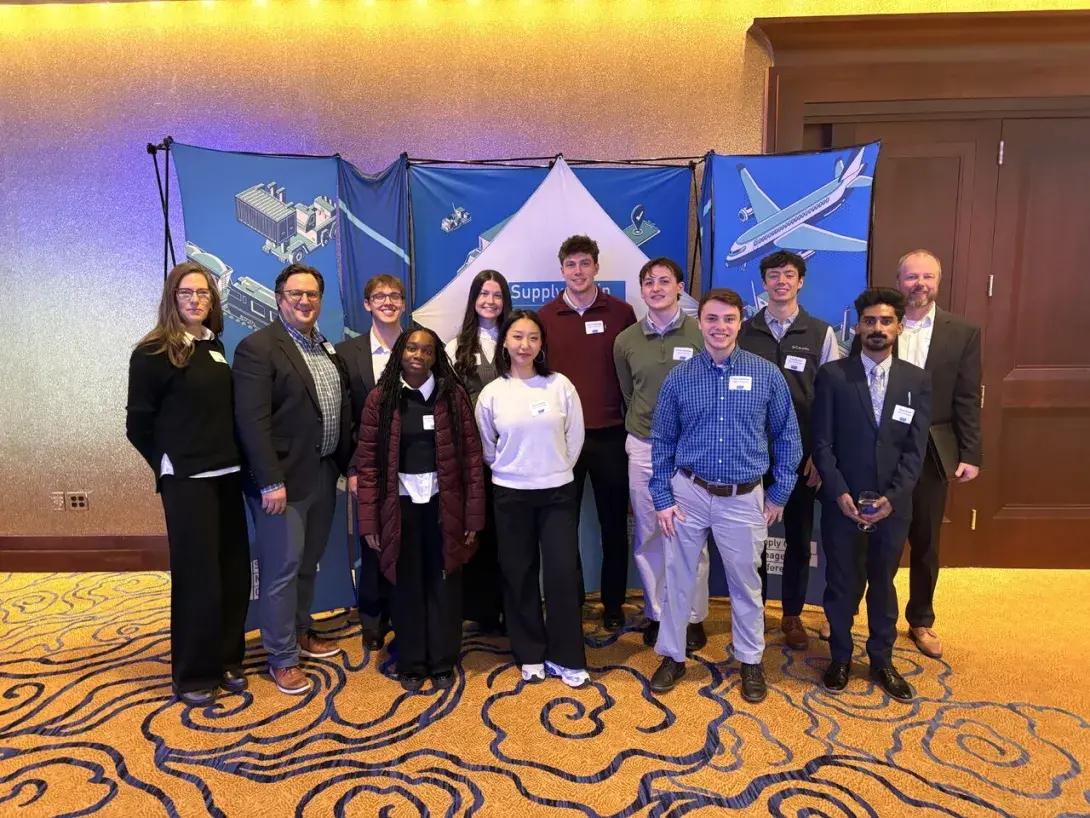
By 8 a.m., senior David Terpstra was already in line for breakfast, surrounded by other Calvin business students and gearing up for his first supply chain management conference. The day unfolded in a steady rhythm: a keynote, breaks to visit company displays, and breakout sessions where attendees chose which room to head to next.
Terpstra didn’t arrive at Calvin planning to major in supply chain. He started in finance, moved to marketing, and added supply chain when he realized he could still graduate on time. “I’ve actually just fallen in love with the supply chain program,” he said, pointing to discussion-driven classes that push students to think on their feet.
Seeing the tools shaping the field
The keynote speaker tackled artificial intelligence. Terpstra expected the usual warnings, but the message was more nuanced: AI is less a replacement than an addition, much like computers were a generation ago. The proof was practical. The presenter’s slides, images included, had been made with AI the day before.
From concept to factory floor: on one screen
During breaks, Terpstra and classmates stopped at displays from a range of companies. One idea he returned to was the “digital twin,” a way to map an entire process from the earliest concept through manufacturing. In his words, it lets you zoom into each stage and then “fall backwards” to see the whole system end-to-end. He’d heard of the concept before, but at the conference he saw how organizations use it to train employees faster and build more efficient operations.
The learning continued during breaks
Terpstra joined a breakout session with Steelcase on environmentally friendly processes and the company’s push toward zero carbon emissions. It was one example of how supply chain decisions connect to long-term stewardship. He also found value in the conversations during breaks. “It was a full day,” he said. Still, it kept paying off in small ways. Talking with a classmate about jobs, life, and their shared class project, he said, made them more comfortable working together and set their team up for success back on campus.
A people-centered view of supply chain
The conference left him with confidence about the industry he’s entering, especially after hearing how companies are approaching new technology, sustainability, and end-to-end systems thinking. “We’re in it together,” he said. “Every person adds some kind of value to the supply chain process… we need each other to move forward in the economy that we live in.”


