Cost and Registration
Register by May 29 to save $50!
- Early registration (through May 29, 2026): $175
- Regular registration (after May 29): $225
Conference Tracks
The AI and Arts track features topics related to:
- Perspectives and ethical challenges related to the use of AI in music composition and music production
- Perspectives and ethical challenges related to the use of AI in visual art, both “fine art” and commercial art
- Use of AI in production of multimedia (i.e. film, video, gaming, or online interactive content)
- Creative use of AI in live performance (music, dance, theater)
- The impact of AI on creativity and the creative process
- AI, copyright, and intellectual property rights
- Theological questions around the imago dei, creativity, and AI
Accelerating advances in artificial intelligence are changing the way work is done, and the work that is done, across industries and for organizations both large and small. Already, the ability of large language models to perform tasks that were once the responsibility of junior staff has shifted the labor market for new college graduates (Ellis & Bindley, 2025), while organizations strive to understand how best to apply AI to enhance productivity and raise competitiveness (Cutter & Zimmerman, 2025).
Yet there is more to business than productivity and competitiveness! Christians in business are called to steward the people, capital, and technologies entrusted to them, to use “God-given resources for the accomplishment of God-given goals” (Blue, 1986: 23). Interpreting the Creation Mandate of Genesis 1:28, Jeff Van Duzer explains that the purposes of business are “(1) to produce goods and services that enable the community to flourish, and (2) to provide opportunities for meaningful work that will allow employees to express their God-given creativity” (Van Duzer, 2010: 42). If these are the goals given by God for businesspeople across times and cultures, then AI can provide new opportunities to accomplish both better; it can also divert capital and talent to purposes that are trivial, harmful, and perhaps even sinful (Baker, 2020 and 2022; Stansbury, 2018 and 2024).
Therefore, it is important for faithful Christian businesspeople to discern how to apply AI technologies in their workplaces as they face complex ethical, environmental, and vocational challenges. This includes the lack of transparency present in algorithmic decision-making (Kim & Routledge, 2022) and the risks of data bias leading to unfair outcomes (Gadani & Bhattacharya, 2025: 31), along with legal concerns tied to intellectual property rights and data privacy (Knight, 2025). AI can also contribute to environmental issues through the growing need for data centers around the world, requiring creative solutions for offsetting water usage and carbon emissions as stewards of our natural resources (Marangella, 2025). Finally, by automating routine and creative tasks, AI could erode opportunities for meaningful work (Garcia-Ruiz & Rocchi, 2025; Sison, 2024) and diminish the development of judgment and ethical decision-making (Bankins & Formosa, 2023).
The Business track of the “Wisdom in the Age of AI” conference is designed to showcase thought leadership on faithful and responsible AI applications in a variety of business disciplines. Our goal is that participants, particularly businesspeople and religious professionals who minister to businesspeople, may grow in their discernment by engaging speakers and one another.
Topics may include:
- How might AI use in small business contribute to the well-being of owners and employees, as well as to profitability?
- Can AI use in strategic planning enhance recognition of potential legal or ethical problems?
- What are the prospects and problems for AI enhancement of talent management?
- Can AI facilitate ethical consultative selling, whether in retail or business-to-business contexts?
- Are financial planning clients well-served by AI-augmented client service, and if so, in what forms?
- Can AI responsibly raise the effectiveness of purchasing negotiators?
- Does AI use affect tax professionals’ abilities to uphold their responsibilities to their clients and to the tax system?
- What are some best practices in ensuring the privacy and wellbeing of customers who use AI bots?
References:
Baker, B. D. 2022. Sin and grace. In Paulus, M. J., & Langford, M. D. (Eds), AI, faith, and the future: An interdisciplinary approach: 190-218. Eugene: Wipf & Stock.
Baker, B. D. 2020. Sin and the Hacker Ethic: The tragedy of techno-utopian ideology in cyberspace business cultures, Journal of Religion and Business Ethics: 4. https://via.library.depaul.edu/jrbe/vol4/iss2/1
Bankins, S. & Formosa, P. 2023. The ethical implications of artificial intelligence (AI) for meaningful work. Journal of Business Ethics, 185: 725-740. https://doi.org/10.1007/s10551-023-05339-7
Baraldi, E., La Rocca, A., & Perna, A. 2014. Good for science, but which implications for business? An analysis of the managerial implications in high-impact B2B marketing articles published between 2003 and 2012. Journal of Business & Industrial Marketing, 29/7/8: 574-592.
Bartunek, J. M., & Rynes, S. L. 2010. The construction and contributions of “Implications for Practice”: What’s in them and what might they offer? Academy of Management Learning & Education, 9(1): 100-117.
Blue, R. 1986. Master your money. Nashville, TN: Thomas Nelson.
Cutter, C., & Zimmerman, H. 2025. CEOs start saying the quiet part out loud: AI will wipe out jobs. Wall Street Journal, July 2. https://www.wsj.com/tech/ai/ai-white-collar-job-loss-b9856259?st=9pXKG6&reflink=article_copyURL_share
Ellis, L., & Bindley, K. 2025. AI is wrecking an already fragile job market for college graduates. Wall Street Journal, July 28. https://www.wsj.com/lifestyle/careers/ai-entry-level-jobs-graduates-b224d624?st=MGzW9c
Gadani, N.N. & Bhattacharya, P., 2025. Ethical considerations in AI development for cloud computing and data-driven software solutions. In Bhattacharya, P., Hassan, A., Liu, H. & Bhushan, B. (Eds), Ethical Dimensions of AI Development: 23-57. Hershey, PA: IGI Global Scientific Publishing.
García-Ruiz, P., & Rocchi, M. 2025. Can work be meaningful under algorithmic management? A MacIntyrean perspective. Business Ethics Quarterly. Published online 2025: 1-28. doi:10.1017/beq.2025.5
Jaworski, B. J. 2011. On managerial relevance. Journal of Marketing, 75: 211-224.
Kim, T. W., & Routledge, B. R. 2022. Why a right to an explanation of algorithmic decision-making should exist: A trust-based approach. Business Ethics Quarterly, 32(1): 75-102. doi:10.1017/beq.2021.3
Knight, H. 2025. Exploring the ethical implications of artificial intelligence in marketing. In Walters, H.D. & Hammond, R.M. (Eds), AI in Marketing: Applications, Insights, and Analysis: 272-295.New York, NY: Routledge.
Marangella, P. 2025. AI amplifies data centers impact-let’s make sure it’s for good. Forbes, July 31. https://www.forbes.com/councils/forbestechcouncil/2025/07/31/ai-amplifies-data-centers-impact-lets-make-sure-its-for-good/
Setkute, J., & Dibb, S. 2025. From theory to practice: Practical implications as a translational bridge between research relevance and impact. Industrial Marketing Management: 125: 131-149.
Sison, A. J. G. 2024. Can digitally transformed work be virtuous? Business Ethics Quarterly, 34(1): 163-191. doi:10.1017/beq.2023.33
Stansbury, J. M. 2018. Shalom and moral imagination for business technologists. Christian Business Review, Fall: 30-39.
Stansbury, J. M. 2025. Sin in business: The contributions of perversion, defilement, and idolatry. Journal of Religion and Business Ethics, 5. https://via.library.depaul.edu/jrbe/vol5/iss1/7
Van Duzer, J. 2010. Why business matters to God (and what still needs to be fixed). Downers Grove, IL: InterVarsity Press.
As AI becomes more ubiquitous and integrated into every domain of human life, the implications for ministry and church life are becoming increasingly apparent. Many Christian leaders are seeking wisdom on AI as it relates to the practices of ministry and the faith formation of church members. With this in mind, the “AI and the Church” conference track will have special emphasis on spiritual formation and the practices of ministry.
Topics may include:
- What role, if any, should AI play in preaching? How might preachers ethically and effectively utilize AI technologies in sermon research and writing?
- Can AI be a useful tool in evangelism and discipleship? How might AI shape our understanding of conversion and faith formation?
- How will participation in corporate worship be affected by AI? To what extent should worship leaders utilize and promote AI technology?
- What spiritual practices might be necessary to mitigate or counteract the negative effects of AI?
- Can AI provide effective pastoral care? What are the implications for interpersonal engagement with AI tools available?
- What theological frameworks might promote effective ministry and healthy congregational life in the age of AI?
The Education track within the Wisdom in the Age of AI Conference dovetails with the accompanying Kuyers Institute/INHCE/de Vries Institute conference on Christian Teaching and Learning, allowing attendees to easily participate in both. The Kuyers/INCHE/de Vries conference will run on October 6-7 and continue with sessions integrated into the AI conference on October 8, with the option of staying for the whole of both events.
AI, Faith, and Wise Teaching and Learning
The advent of AI has impacted education rapidly and significantly, generating new anxieties, challenges, and possibilities as well as an array of conflicting narratives of creative possibility, apocalyptic decline, and educational redesign. This track will focus on the relationship between the educational use and context of AI and Christian teaching and learning. Topics may include:
How is the use of AI in learning settings interacting with students spiritual, moral, and interpersonal formation?
How is the design of learning activities by teachers contributing to that interaction?
What questions of Christian ethics should constrain or motivate efforts to use AI constructively in teaching and learning?
How might AI tools support or undermine specifically Christian learning goals? How does educational use of AI relate to theological understandings of human personhood and responsibility?
How might our uses of AI support or undermine students’ holistic wellbeing?
How does educational use of AI affect the interests of and relationships among various educational stakeholders, such as students, teachers, parents, communities, and churches?
Theme: AI and technology use to promote quality of care
There is increasing use of technology, simulation and virtual reality in the preparation of future health professionals as well as in the care of clients to promote quality of care. The use of Artificial Intelligence (AI), which entails the use of computer systems that can perform tasks that typically require human intelligence, such as perception, reasoning, and decision-making, is growing. The use of AI in clinical decision support systems, for reporting and documentation, medical diagnosis, and addressing client complaints, also has the potential to revolutionize healthcare delivery, improve patient outcomes, and transform health professionals' roles.
This track provides opportunities for health care professionals, educators, and leaders at all levels of practice and experience to engage in in-depth discussions about the benefits and challenges (including ethics) of using AI and other machine learning strategies in healthcare.
The sessions will focus on the role of AI in healthcare, specifically in areas like diagnostics, patient safety, reducing burnout through automation, and leveraging AI in the education of future health professionals. These sessions will also highlight how AI is used to develop simulations that advance student clinical judgment skills and interprofessional educational experiences. The sessions will offer valuable insights for leaders to recognize potential strengths and limitations of AI and Machine Learning (ML) in health care and explore how to responsibly use AI to promote quality care, patient satisfaction and health professionals' efficiency.
These sessions aim to offer valuable insights into innovative strategies related to:
- Responsible use of AI to promote quality care, patient satisfaction, and health professionals' efficiency including the challenges.
- Strategies to keep patients at the center of care while using AI technologies
- The intersection of AI, faith and health promotion
- Ethical governance of AI in healthcare
- Opportunities for quality Improvement using AI
- Use of AI to develop simulation scenarios and performance metrics
- Health care delivery and impact of telehealth and remote monitoring initiatives
The AI & STEM track aims to showcase technical and reflective work at the intersection of artificial intelligence, emerging technologies, and Christianity. Sessions and panels may cover topics such as:
- Use of AI in STEM fields such as biology, chemistry, physics, environmental science, mathematics, or engineering
- Develop and use of AI systems for ecological monitoring, biodiversity assessment, or conservation efforts
- Apply machine learning to molecular design, materials discovery, or chemical synthesis with consideration of safety and sustainability
- Develop or apply AI methods in mathematical research, theorem proving, or formal verification with attention to reliability and interpretability
- Examine AI's role in scientific discovery, including reproducibility and epistemic concerns
- Christian values in AI development, such as human formation, dignity, and flourishing
- Address bias, fairness, or transparency in AI models
- Implement value-aligned system architectures or explainable AI
- Explore human-AI collaboration, interaction, or oversight
- Measure or mitigate ecological or computational costs of AI
- Use AI for social good and to serve underserved communities
- Develop tools to support ethical decision-making in technical teams
- Build educational AI systems or tools that support learning while honoring human agency in STEM
Artificial intelligence is creating both extraordinary opportunity and profound challenge for colleges and universities, reshaping higher education faster than our moral frameworks, pedagogical practices, and systems of governance can easily keep pace. The Executive Forum on Artificial Intelligence offers senior leaders a rare chance to step out of the noise and into a high-trust, peer-driven setting for strategic reflection, candid conversation, and wise action.
Designed as a conference within a conference, this invitation-only forum convenes presidents, provosts, and cabinet-level leaders for executive-level dialogue on AI strategy, teaching and learning, institutional operations, and the Christian life. Participants engage in curated roundtables, case studies, and panel conversations with peers who are actively navigating AI’s opportunities, risks, and moral obligations in Christian higher education.
With dedicated working space, full access to the broader Wisdom within the Age of AI Conference, and time intentionally protected for peer engagement, the Executive Forum is designed not merely to inform, but to shape leaders making consequential decisions in a rapidly changing technological landscape.
Keynote Speakers
We are delighted to host a remarkable lineup of keynote speakers. In addition to the speakers listed below, we will also be hosting Calvin alumni, Ryan Struyk, the Director of AI Innovation at CNN.

Andy Crouch
Author, Musician, Public Speaker
Keynote: Waking From Our AI Dreams
Andy Crouch is partner for theology and culture at Praxis, a venture-building ecosystem advancing redemptive entrepreneurship. His writing explores faith, culture, and the image of God in the domains of technology, power, leadership, and the arts. He is the author of five books and his work and writing have been featured in The New York Times, The Wall Street Journal, Time, and several editions of Best Christian Writing and Best Spiritual Writing.
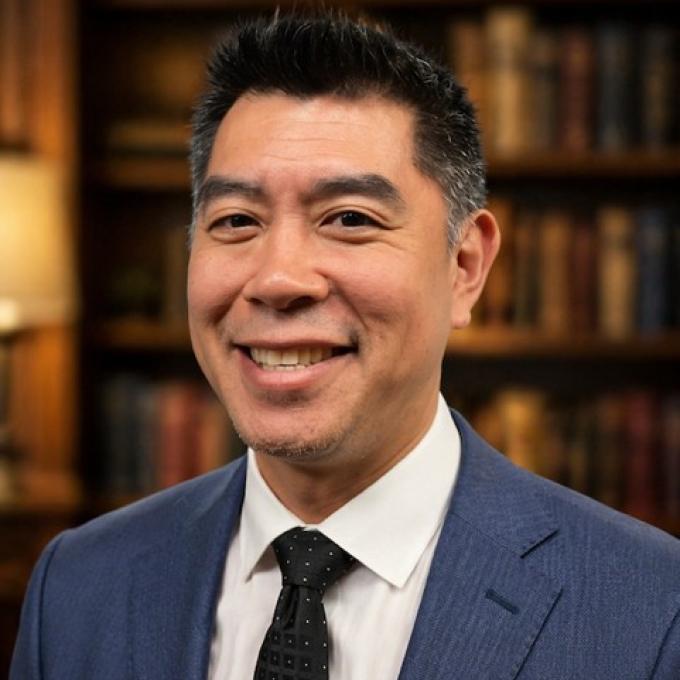
Israel Soong
Deputy Director, Office of Artificial Intelligence, CIA
Keynote: A Better Eschatology: Toward AI-Enabled Human Flourishing
Israel Soong is currently the Deputy Director for the Office of Artificial Intelligence at the Central Intelligence Agency, where he is working to champion, orchestrate, and integrate AI activities across the organization. Prior to this role, he served at the White House National Security Council. Throughout his decades of service with the Agency, Mr. Soong has held various positions, including assignments in support of the counterterrorism, China, and Near East missions, with multiple deployments overseas. His writing has been featured by The Gospel Coalition and by the William Tennent School of Theology.

Rosalind W. Picard
Grover M. Hermann Professor in Health Sciences and Technology; Director of Affective Computing Research Group
Keynote: Are we merely machines?
Rosalind Picard, Sc.D., is a scientist, inventor, entrepreneur, author, and engineer. She is the Grover M. Hermann Professor of Health Sciences and Technology at the MIT Media Lab.

Friar Paolo Benanti
The Vatican's top AI expert and a leading voice on AI ethics
Keynote: TBD
Friar Paolo Benanti is an Italian Catholic priest, theologian and academic. He is a member of the Third Order Regular of St. Francis who teaches at the Pontifical Gregorian University and is advisor to Pope Francis on issues of artificial intelligence and technology ethics. In addition to his service on three major Vatican councils, Fr. Benanti is a key leader and global advocate for The Rome Call for AI Ethics, an agreement to promote a sense of shared responsibility among international organizations, governments, institutions and technology companies for a future in which digital innovation and technological progress are centered on humankind.

Ryan Struyk
Director, AI Innovation at CNN
Keynote: The Future of AI and News
Ryan Struyk leads CNN’s strategic efforts to integrate artificial intelligence in the newsroom as Director of AI Innovation. In this position, he focuses on empowering journalists to tell AI-driven stories, leveraging AI to streamline editorial workflows, and educating journalists to use AI ethically and responsibly.
Location
Prince Conference Center
1800 East Beltline SE
Grand Rapids, MI 49546