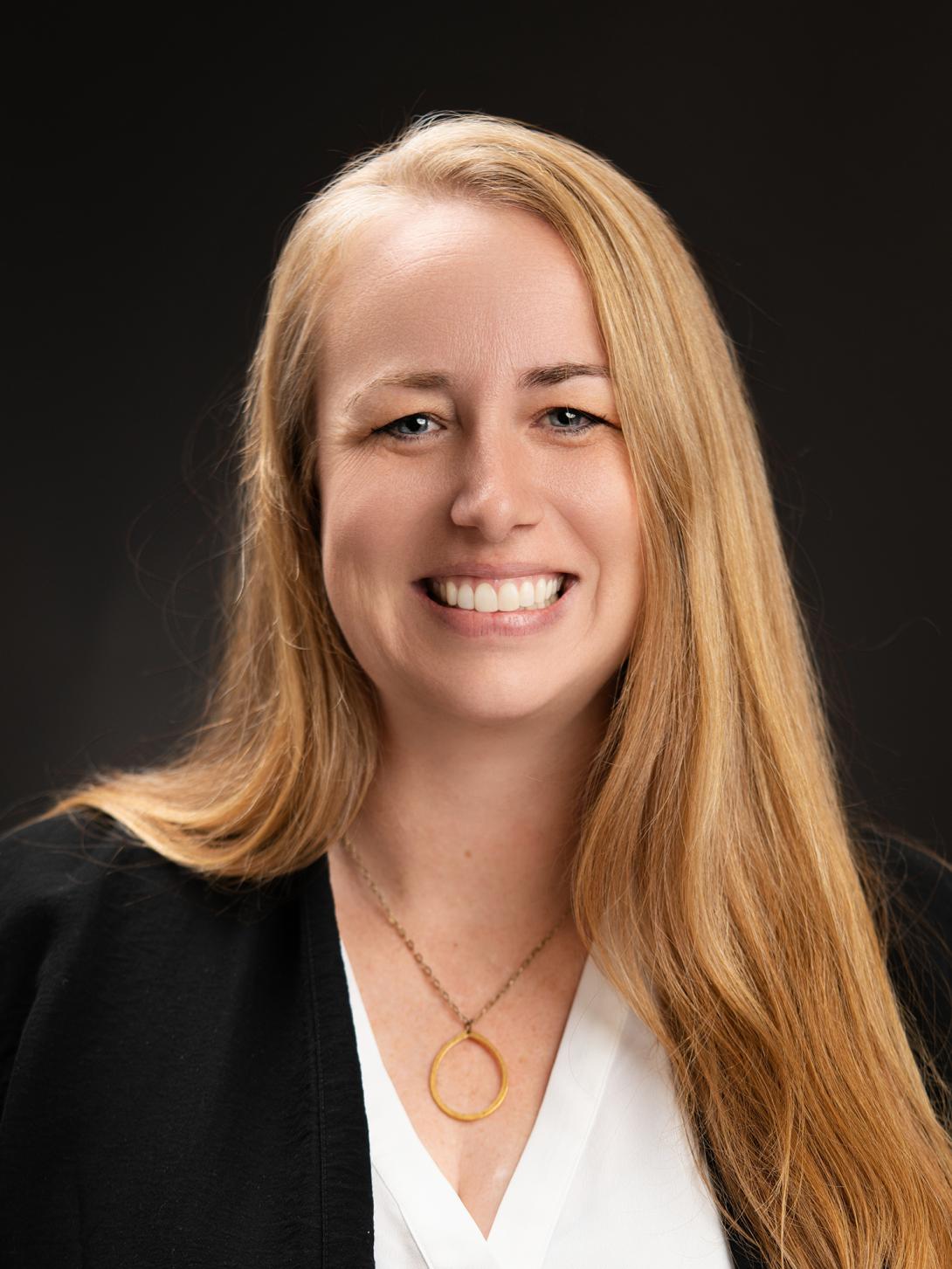
Biography
I grew up on the west coast and did my undergraduate studies in biology and chemistry at Calvin. After graduating from Calvin in 2008, I worked in research and development at a pharmaceutical company and then taught second grade in a bilingual school in Gracias, Honduras. I went on to earn a Ph.D. in toxicology at the University of Michigan, did my postdoc in pediatric infectious disease at Seattle Children’s Research Institute, and returned to Calvin as a faculty member in 2016. When I am not teaching or in the lab, I can usually be found spending time with friends and family. I enjoy cooking for lots of people, canning, and spending time in the outdoors (canoeing, camping, hiking, etc.). Life always seems better in a canoe.
Education
- Ph.D. in Toxicology, University of Michigan (2014)
- B.S. in Biology, Calvin College (2008)
Professional Experience
- Calvin University, Associate Professor of Biology (2023–present)
- University of Michigan, Visiting Scholar in Environmental Health Sciences (2024–2025)
- Calvin University, MPH Program Director (2021–2024)
- Calvin University, Assistant Professor of Biology (2016–2023)
- Seattle Children’s Research Institute, Postdoctoral Fellow (2014–2016)
- Bend Research, Research Intern (2007–2009)
Academic Interests
I am interested in animal physiology, toxicology, human reproductive biology, and public health. I teach a variety of human and animal biology courses and labs including physiological systems and pathophysiology. I also get to apply the biological principles I teach when conducting research with students in my lab. My research focuses on understanding the mechanisms of adverse pregnancy outcomes.
In addition, I teach a public health course about the impact of clean water. Students spend the first 8 weeks of the semester learning how the availability of clean water relates to nutrition, poverty, life expectancy, education, employment, and income of different communities. Students then get to travel to Honduras, Navajo Nation, and/or Kenya during spring break, and when they return, we spend time debriefing their experiences and writing a policy proposal.
Research
My lab studies how pregnancy is affected by both infections and environmental chemicals. We are especially interested in what happens at the maternal-fetal interface, the place where the mother and developing baby interact. Our research looks at how bacteria such as Group B Streptococcus and toxic chemicals such as trichloroethylene (TCE) can change immune responses, alter inflammation, and increase the risk of pregnancy complications like preterm birth. By studying these processes, we hope to better understand how to keep pregnancies and babies healthy.
Publications
(*Calvin undergraduate students)
T Russell, E Elkin, J Dou, J Ciarelli, E Boldenow, V Padmanabhan, JA Colacino, KM Bakulski, SM Harris. 2026. Trichloroethylene and perchloroethylene metabolites have fetal sex-specific RNA expression impacts in a full term placental villous explant model. Environmental Toxicology and Pharmacology 128: 105183.
A Benjamin, E Boldenow, S Jaber, K Bakulski, J Dou, J Colacino, P Mancuso, S Harris. 2025. Evaluating impacts of the trichloroethylene metabolite S-(1,2-dichlorovyinyl)-L-cysteine on transcriptomic responses and cytokine release in a macrophage model: implications for pregnancy outcomes. Journal of Immunotoxicology 22(1): 2522041.
HR Park, SM Harris, E Boldenow, DM Aronoff, M Rea, C Xi, R Loch-Caruso. 2024. The antioxidant N-acetyl cysteine inhibits cytokine and prostaglandin release in human fetal membranes stimulated ex vivo with lipoteichoic acid or live group B streptococcus. American Journal of Reproductive Immunology 91(1): e13807.
ER Elkin, AL Su, JF Dou, JA Colacino, D Bridges, V Padmanabhan, SM Harris, E Boldenow, R Loch-Caruso, KM Bakulski. 2023. Sexually concordant and dimorphic transcriptional responses to maternal trichloroethylene and/or N-acetyl cysteine exposure in Wistar rat placental tissue. Toxicology 483: 153371.
SM Harris, KM Bakulski, J Dou, E Houskamp*, EC Scheeres*, E Schellenboom*, O Harlow*, R Loch-Caruso, E Boldenow. 2022. The trichloroethylene metabolite S-(1,2-dichlorovinyl)-l-cysteine inhibits lipopolysaccharide-induced inflammation transcriptomic pathways and cytokine secretion in a macrophage cell model. Toxicology in Vitro 84: 105429.
SM Harris, E Boldenow, SE Domino, R Loch-Caruso. 2020. Toxicant disruption of immune defenses: potential implications for fetal membranes and pregnancy. Frontiers in Physiology 11: 565.
J Vornhagen, B Armistead, V Santana-Ufret, C Gendrin, S Merillat, M Coleman, P Quach, E Boldenow, V Alishetti, C Leonhard-Melief, LY Ngo, C Whidbey, KS Doran, C Curtis, KMA Waldorf, E Nance, L Rajagopal L. 2018. Group B streptococcus exploits vaginal epithelial exfoliation for ascending infection. Journal of Clinical Investgation 128(5): 1985–1999.
T Mitchell, JW MacDonald, S Srinouanpranchanh, TK Bammler, S Merillat, E Boldenow, M Coleman, K Agnew, A Baldessari, JE Stencel-Baerenwald, J Tisoncik-Go, RR Green, MJ Gale Jr, L Rajagopal, KM Adams Waldorf. 2018. Evidence of cardiac involvement in the fetal inflammatory response syndrome: disruption of gene networks programming cardiac development in nonhuman primates. American Journal of Obstetrics and Gynecology 218(4): 438.e1–438.e16.
KM Adams Waldorf, BR Nelson, JE Stencel-Baerenwald, C Studholme, RP Kapur, B Armistead, CL Walker, S Merillat, J Vornhagen, J Tisoncik-Go, A Baldessari, M Coleman, MK Dighe, DWW Shaw, JA Roby, V Santana-Ufret, E Boldenow, J Li, X Gao, MA Davis, JA Swanstrom, K Jensen, DG Widman, RS Baric, JT Medwid, KA Hanley, J Ogle, GM Gough, W Lee, C English, WM Durning, J Thiel, C Gatenby, EC Dewey, MR Fairgrieve, RD Hodge, RF Grant, L Kuller, WB Dobyns, RF Hevner, M Gale Jr, L Rajagopal. 2018. Congenital Zika virus infection as a silent pathology with loss of neurogenic output in the fetal brain. Nature Medicine 24(3): 368–374.
HR Park, SM Harris, E Boldenow, RC McEachin, M Sartor, M Chames, R Loch-Caruso. 2018. Group B streptococcus activates transcriptomic pathways related to premature birth in human extraplacental membranes in vitro. Biology of Reproduction 98(3): 396–407.
C Gendrin, NJ Shubin, E Boldenow, S Merillat, M Clauson, D Power, KS Doran, M Abrink, G Pejler, L Rajagopal, AM Piliponsky. 2018. Mast cell chymase decreases the severity of group B Streptococcus infections. Journal of Allergy and Clinical Immunology 142(1): 120–129.e6.
E Boldenow, C Gendrin, L Ngo, C Bierle, J Vornhagen, M Coleman, S Merillat, B Armistead, C Whidbey, V Alishetti, V Santana-Ufret, J Ogle, M Gough, S Srinouanprachanh, JW MacDonald, TK Bammler, A Bansal, HD Liggitt, L Rajagopal, KM Adams Waldorf. 2016. Group B Streptococcus circumvents neutrophils and neutrophil extracellular traps during amniotic cavity invasion and preterm labor. Science Immunology 1(4): eaah4576.
KM Adams Waldorf, JE Stencel-Baerenwald, RP Kapur, C Studholme, E Boldenow, J Vornhagen, A Baldessari, MK Dighe, J Thiel, S Merillat, B Armistead, J Tisoncik-Go, RR Green, MA Davis, EC Dewey, MR Fairgrieve, JC Gatenby, T Richards, GA Garden, MS Diamond, SE Juul, RF Grant, L Kuller, DW Shaw, J Ogle, GM Gough, W Lee, C English, RF Hevner, WB Dobyns, M Gale Jr, L Rajagopal. 2016. Fetal brain lesions after subcutaneous inoculation of Zika virus in a pregnant nonhuman primate. Nature Medicine 22(11): 1256–1259.
J Vornhagen, P Quach, E Boldenow, S Merillat, C Whidbey, LY Ngo, KM Adams Waldorf, L Rajagopal. 2016. Bacterial hyaluronidase promotes ascending GBS infection and preterm bBirth. mBio 7(3): e00781-16.
C Gendrin, J Vornhagen, L Ngo, C Whidbey, E Boldenow, V Santana-Ufret, M Clauson, K Burnside, DP Galloway, KM Adams Waldorf, AM Piliponsky, L Rajagopal. 2015. Mast cell degranulation by a hemolytic lipid toxin decreases GBS colonization and infection. Science Advances 1(6): e1400225.
RM McAdams, CJ Bierle, E Boldenow, S Weed, J Tsai, RP Beyer, JW MacDonald, TK Bammler, HD Liggitt, FM Farin, J Vanderhoeven, L Rajagopal, KM Adams Waldorf. 2015. Choriodecidual group B Streptococcal infection induces miR-155-5p in the fetal lung in Macaca nemestrina. Infection and Immunity 83(10): 3909–3917.
C Whidbey, J Vornhagen, C Gendrin, E Boldenow, JM Samson, K Doering, L Ngo, EA Ezekwe Jr, JH Gundlach, MA Elovitz, D Liggitt, JA Duncan, KM Adams Waldorf, L Rajagopal. 2015. A streptococcal lipid toxin induces membrane permeabilization and pyroptosis leading to fetal injury. EMBO Molecular Medicine 7(4): 488–505.
E Boldenow, I Hassan, MC Chames, C Xi, R Loch-Caruso. 2015. The trichloroethylene metabolite S-(1,2-dichlorovinyl)-l-cysteine but not trichloroacetate inhibits pathogen-stimulated TNF-α in human extraplacental membranes in vitro. Reproductive Toxicology 52: 1–6.
E Boldenow, KA Hogan, MC Chames, DM Aronoff, C Xi, R Loch-Caruso. 2015. Role of cytokine signaling in group B Streptococcus-stimulated expression of human beta defensin-2 in human extraplacental membranes. American Journal of Reproductive Immunology 73(3): 263–272.
ML Korir, D Knupp, K LeMerise, E Boldenow, R Loch-Caruso, DM Aronoff, SD Manning. 2014. Association and virulence gene expression vary among serotype III group B streptococcus isolates following exposure to decidual and lung epithelial cells. Infection and Immunity 82(11): 4587–4595.
E Boldenow, S Jones, RW Lieberman, MC Chames, DM Aronoff, C Xi, R Loch-Caruso. 2013. Antimicrobial peptide response to group B Streptococcus in human extraplacental membranes in culture. Placenta 34(6): 480–485.
Teaching
My courses often focus on biological function: how things work in the body and what can go wrong when function is altered. Regardless of the topic, I always try to utilize best teaching practices for knowledge retention. In my classes, we do a lot of active learning—stopping regularly throughout lecture to think, practice, and apply the concepts we just learned about.
Awards
- 2025, Calvin University From Every Nation Award for Excellence in Teaching
- 2021, Calvin University Exceptional Service Award
Grants
- 2026–2031, co-investigator (PI: Sean Harris, University of Michigan), NIH R01 Grant 1R01ES038132-01: Volatile organic compound impacts on immune functions during pregnancy: molecular mechanisms for potential interventions ($2,498,572)